


Image
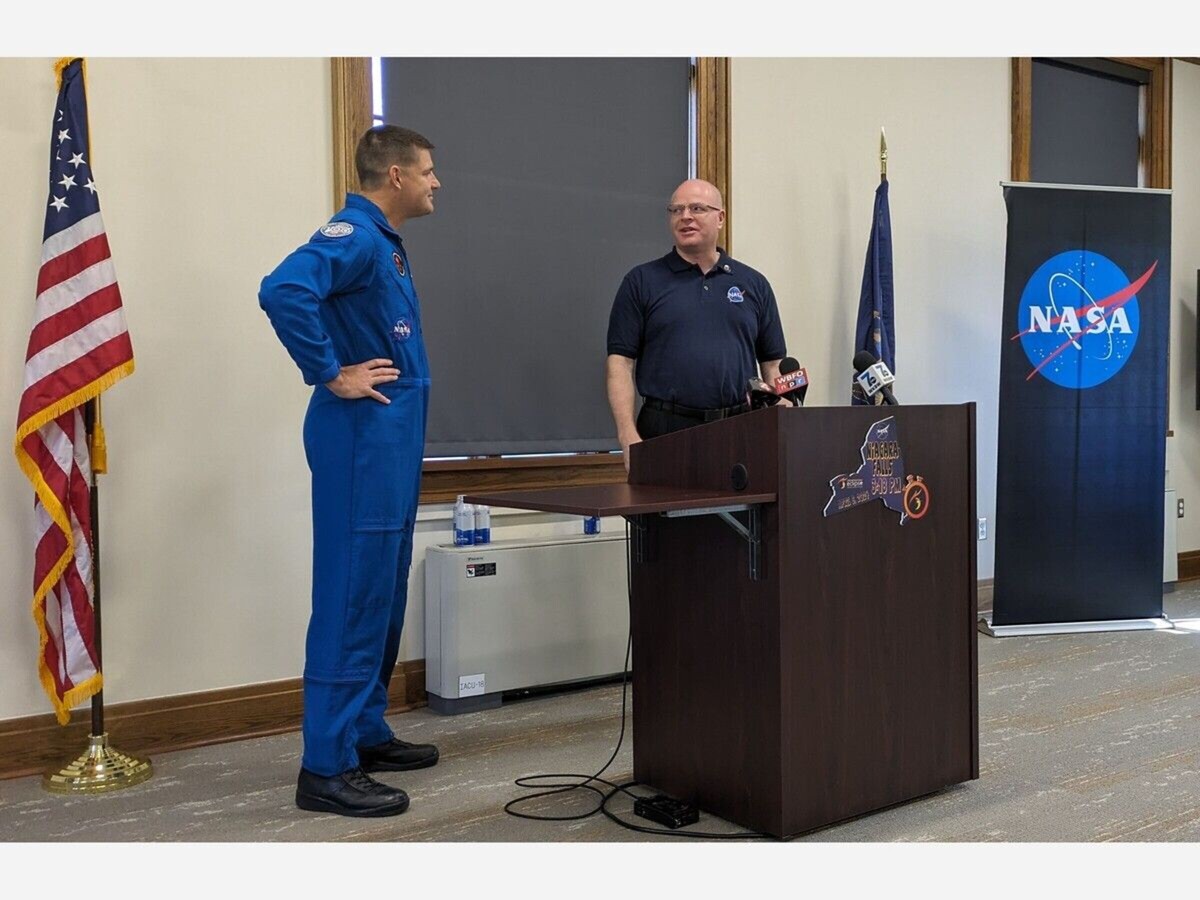
I watched 60 Minutes last night and saw Jeremy Hansen, the Canadian astronaut who is one of 4 people who will be aboard Artemis II, the NASA probe that will go past the moon in 2028 further than any manned craft has ever gone.
I talked to Hansen in April, 2024 and remember the conversation vividly.
I also remember asking him his impressions after staying in Niagara Falls.
Hansen served as a fighter pilot who flew alongside the United State Air Force in Iraq and Afghanistan.
I remember like yesterday part of our conversation I never shared out of deference for a man I consider a hero. This is from memory, not notes:
“So where are you guys staying?” I asked.
“You know how the federal government is,” he said. “Wyndham Garden. The cheapest pace possible. My room had a volleyball-sized head in the wall. My colleague’s room had a chair held together with a hose clamp.”
“So did you venture outside the hotel and the park?” I asked.
“Only once,” he said. “I put ‘grocery store near me’ into Google. It led me to a Tops Market. I saw an armed guard and a police substation and said to myself ‘maybe I shouldn’t be here.’ ”
I paused a moment before responding.
“I shop there all the time,” I said. “In the community, we call it the 'ghetto' Tops.
“Tops became a big chain but it was founded by Italians and that was the first big supermarket in Western New York.”
I’m sure that’s not what I said but it’s what I hoped I did. Anyway, here’s what I wrote almost two years ago:
Bringing Science to the People (April 7, 2024)
No one from the Niagara Gazette or Buffalo News covered the press conference at the State Parks Education building.
Jeremy Hansen grew up in Ontario, became a pilot at a young age, joined the Canadian Air Force and was an F-18 pilot before being accepted into Astronaut Training. He leads the explorers who will be on Artemis II which will circle the moon in 2026 before Artemis III lands.
Hansen said he was in university when he met Chris Hadfield, perhaps the most famous Canadian astronaut ever. Hadfield was still in the astronaut corps when Hansen signed on. He became a mentor and friend. They met for lunch a few weeks ago.
The eclipse is important, Hansen said, because of the perspective it gives.
“It caused people to ask questions back when they thought the earth was flat,” he said. “When do you ever look at the sun? We just take it for granted. It rises and sets.”
David Cheney, a heliophysicist for NASA (space meteorologist) and Hansen spoke of how space has become critical to our existence.
“If we could turn off space for a moment,” Hansen said, “it would be ‘wow, turn it back on.’ ”
Cheney said as much as the science is important, for example, understanding how space weather impacts communications, so is interacting with the public and encouraging citizen scientists which is the primary mission of the NASA delegation in the Falls.
The closest experiment, Cheney said, will be rockets launched from Virginia to study changes in the ionosphere.
Hansen said he left his hotel Saturday morning and stepped onto the street here wearing a blue space jumpsuit when he was approached by a young man who recognized him as an astronaut.
“He told me all about the Voyager,” Hansen said. “He wants to grow up and work for NASA and be part of the next Voyager.”
He is 7 years old.
Hansen said the key to life is to find something you are passionate about and then tell everyone. Inspiration and encouragement will come from those around you. Vision is not as important as passion.

Sunny, with a high of 89 and low of 59 degrees. Sunny in the morning, clear overnight.

One of these days, the dog and I are going to meet up with you and I'll pick your brain on cell service, curing meats in the attic, and the tour guide life!
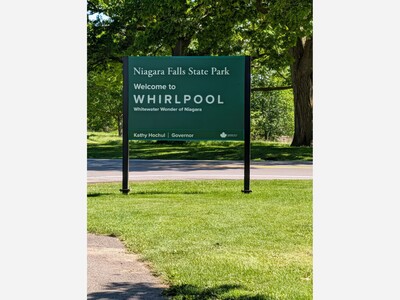
We're on Whirlpool and have had repeated issues of our cell phones picking up the Canadian cell towers across the gorge and having to argue that we're not roaming to Google fi.
I think the expanded Niagara falls State Park is a good idea because it helps showcase the extensive gorge park and trails from devils hole to the falls. Canadian side does not have anything like that. We are located near Whirlpool and I hope they continue to allow the Meadows to grow wild rather than trying to cr