



Image
By Jeffery Flach
Gorgeview Hostel
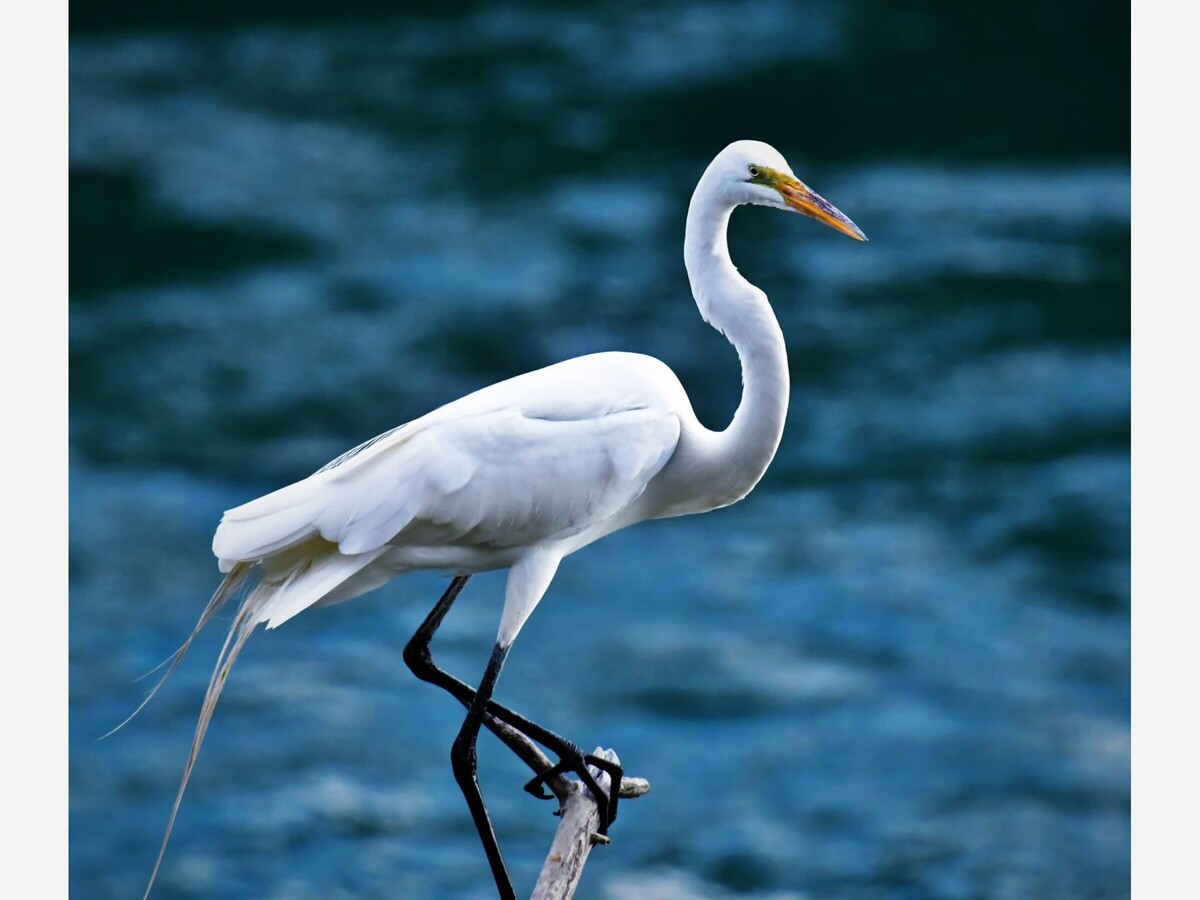
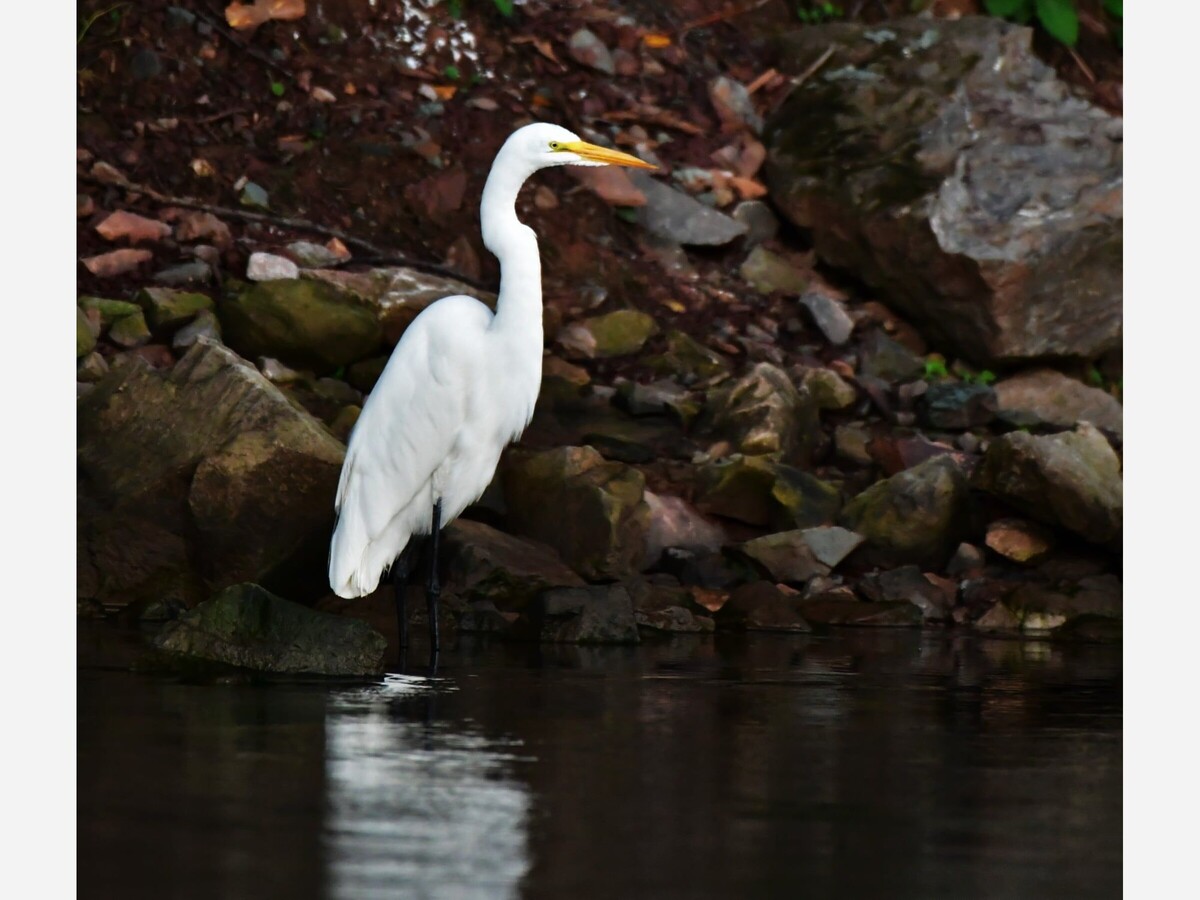
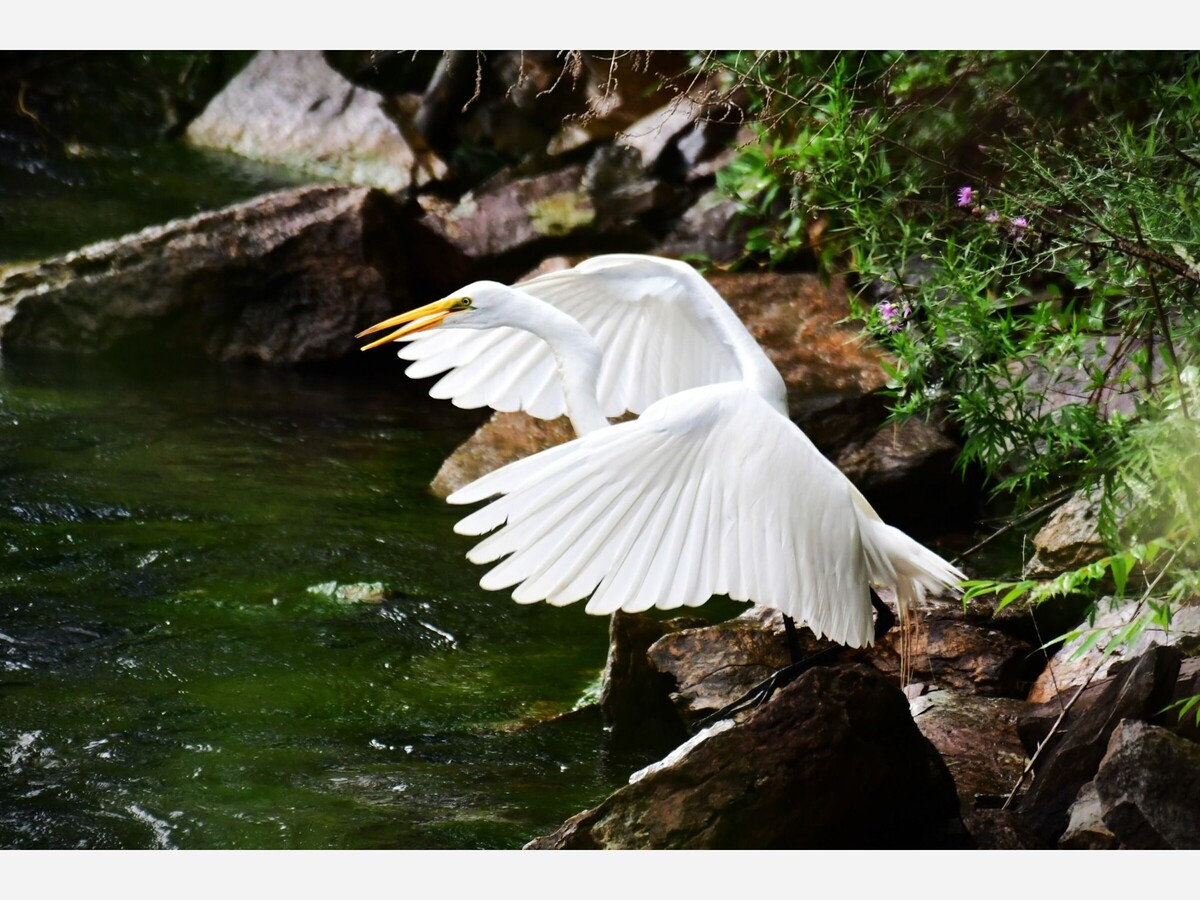
On certain mornings along the Niagara River, a white shape lifts from the reeds as if it has been cut from the mist itself. It is clean, almost luminous—an egret, moving with a calm precision that makes the river feel briefly quieter than it is. People come to Niagara Falls to witness power: the roar, the plunge, the trembling air. But an egret offers a different kind of proof. It proves that wonder is not confined to the brink. It is threaded through the whole corridor—along the banks, in the shallows, in the backwaters, and in the places most tourists never see because we never invite them there.
The egret’s presence here should be celebrated as a local headline. Not because it is a circus act, and not because we need to exaggerate what nature is doing. The opposite. The egret is compelling precisely because it is real and unbothered by our marketing failures. It hunts with patience, steps with deliberation, and turns the river’s edge into a stage without asking permission from anyone. You don’t have to be a birder to understand what you’re seeing. You only have to notice that something elegant is living within our city’s daily geography.
And that’s where the regrets begin.
Niagara Falls has built an economy around one gravitational center, then trained both residents and visitors to treat everything else as peripheral. The standard pattern is familiar: hotel, Falls, a narrow strip of attractions, and then departure. It’s efficient for a quick hit of spectacle—but it is a terrible design for a city trying to increase stay length, diversify spending, and build off-season visitation. We talk constantly about tourism, but too often we behave as if the only asset worth presenting is water going over rock. Meanwhile, the Niagara River corridor hosts a living ecology that many visitors already want to see—because they came here for natural wonder in the first place.
That is the missed opportunity: the same motivation that brings someone to the Falls can carry them deeper into the city—if we design for it.
An egret can do what the Falls often cannot. The Falls overwhelm. They are immediate, loud, total. An egret draws a person sideways, into quieter spaces where attention becomes more personal. It makes people slow down. It turns a visitor into a participant. “Where did it go?” becomes “Where else can I find one?” And that question—asked sincerely—creates movement. Movement creates dispersal. Dispersal creates meals in different neighborhoods, stops at local businesses, and reasons to return when the season changes and different birds arrive. This is not ideology; it is practical visitor psychology.
Yet we rarely showcase this. We don’t tell tourists that the Niagara River is not only a famous view—it is a globally significant corridor of life. We don’t build simple, consistent interpretation that points people toward bird-rich locations at different times of year. We do not package ecological discovery as part of the Niagara experience, even though it matches what visitors already imagine Niagara should be: a natural system, not a single snapshot.
Instead, we treat ecology like a private hobby—something a few locals notice while the city runs tourism as if nature ends at the guardrail.
That is regrettable. And the deeper regret is that it reflects an internal failure before it reflects an external one: we have not fully embraced the wonder of our own environment. We live beside a river that gathers life at scale, yet we behave as if the only story worth telling is the one printed on the postcard. When a community does not recognize its own ecological wealth, it cannot present it convincingly to anyone else. We cannot showcase what we do not understand, and we cannot capitalize on what we do not value.
But “regrettable” does not mean permanent.
This is reversible, and the remedy does not begin with a mega-project. It begins with attention and narration. It begins with residents learning the patterns of their own place—seasonal, local, knowable—and then sharing those patterns with visitors in a way that feels grounded, not gimmicky. The economic logic is straightforward: broaden the “natural wonder” footprint of Niagara Falls from a single iconic viewpoint into a distributed network of ecological moments across the city. Turn tourists into explorers. Turn short visits into layered visits. Turn the off-season into a different peak rather than a quiet surrender—because winter birds, spring migrations, and late-summer sightings can each become reasons to return.
We already know this works. When we treat birds as “beacons”—living, visible, compelling—we create invitations inward that are aligned with both stewardship and strategy.
Let’s notice them on the Niagara River and treat that sighting as a civic asset rather than a private delight. Let’s make it easy for a visitor to learn what they saw, where else they might see it, and what that presence means about the health and richness of our river corridor. Let’s use that single white bird—quiet, unmistakable, and real—as an emblem of a larger shift: from tourism that concentrates, accelerates, and ejects to tourism that disperses, deepens, and returns.
Enjoy egrets more and experience less regret. We can continue to ignore the living wonder around us and keep wondering why visitors don’t stay longer, don’t come back in winter, and don’t spread their attention and spending across our city. Or we can decide to understand our ecology, embrace it, and share it with the world.
Taking notice of a bird like the egret—and inviting others to notice it too—is an excellent start

Sunny, with a high of 89 and low of 59 degrees. Sunny for the morning, clear overnight.

One of these days, the dog and I are going to meet up with you and I'll pick your brain on cell service, curing meats in the attic, and the tour guide life!
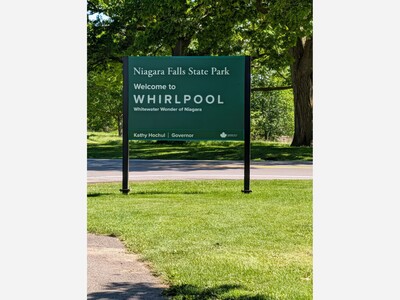
We're on Whirlpool and have had repeated issues of our cell phones picking up the Canadian cell towers across the gorge and having to argue that we're not roaming to Google fi.
I think the expanded Niagara falls State Park is a good idea because it helps showcase the extensive gorge park and trails from devils hole to the falls. Canadian side does not have anything like that. We are located near Whirlpool and I hope they continue to allow the Meadows to grow wild rather than trying to cr