50° and Sunny


Image
By Jeffery Flach
Gorge View Hostel
Niagara Falls is famous for its water, mist, and spectacle. But in winter—when the tour buses thin and the river’s voice grows—Niagara becomes something else entirely: The gull capital of the world. The Niagara River is a globally significant important bird area designated by Audubon and A Ramsar site (a convention of over 172 countries aimed at preserving globally important wetlands).
Because it meets all nine Ramsar criteria, the Niagara River Corridor stands out as one of the most ecologically significant wetlands in North America—a rare distinction among Ramsar sites globally. Our gull population is a big part of that designation. Locals may see nuisance; the world sees extraordinary ecological significance.
In a typical year, birders can log 19 or more gull species in the Niagara region, and over time 29 gull species have been recorded here—out of roughly 42 species worldwide. That’s not a trivia point.
The King of the Gull capital is the Great Black-backed Gull.
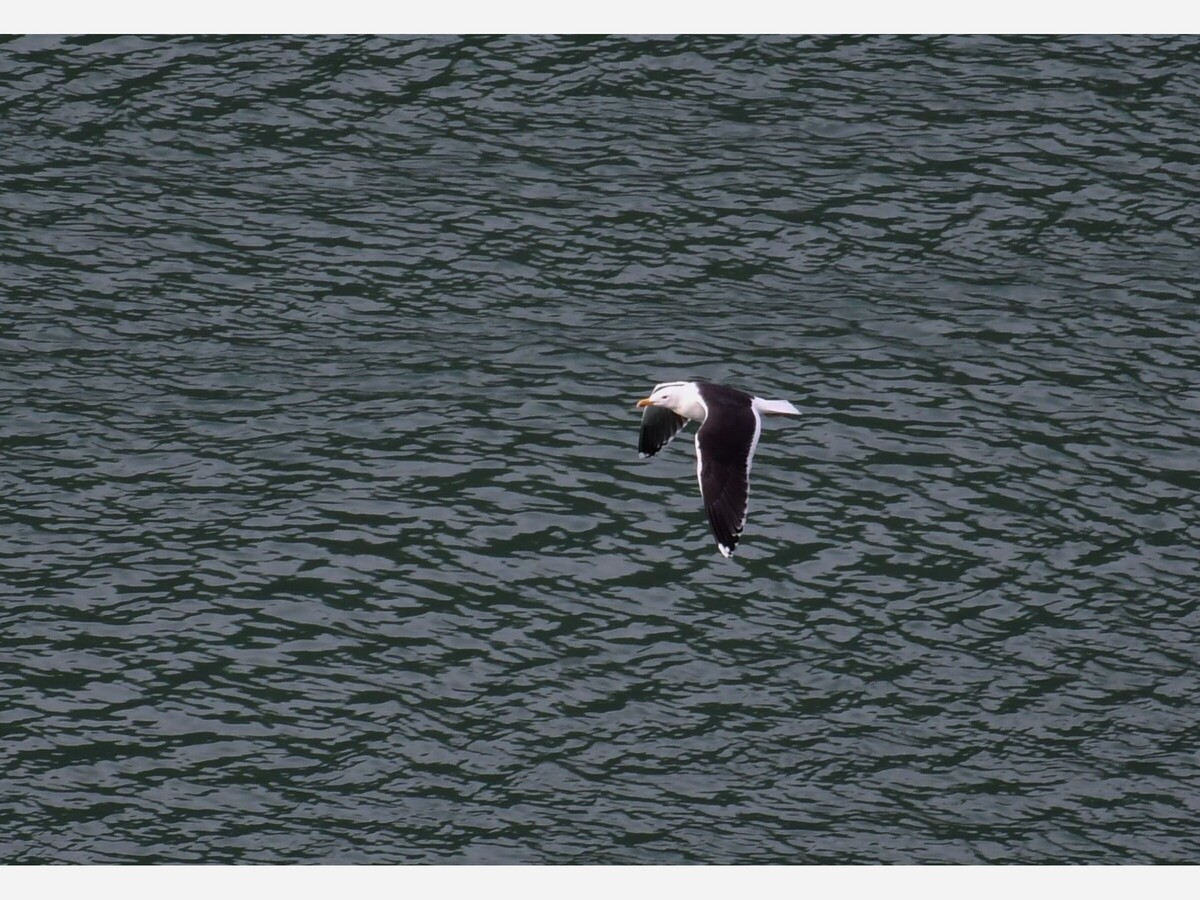
It is the largest gull in the world, with a wingspan that can push five feet and a build that reads like authority: broad wings, heavy body, thick neck, and a bill that looks designed to end arguments. Even at a distance, you feel it. Adults have a clean white head and underparts, and a back so dark it reads black in winter light. In the Niagara Gorge, where the palette is often slate, whitewater, and ice, that dark mantle hits like ink. It doesn’t blend. It commands space.
It often behaves the way it looks, muscling into a feeding knot, or taking advantage of weakness in the flock. In mixed crowds, you can watch the hierarchy happen in real time: smaller gulls yield, larger gulls hesitate, and the Great Black-backed steps forward like it owns the shoreline.
Why use this bird as a winter subject for Niagara?
Because it becomes more reliable here in winter, when the river concentrates life. Many Great Black-backeds spend their warm months closer to the Atlantic coastline and breeding areas farther north. But when winter tightens and food becomes less predictable—Niagara becomes an inland answer. Dependable enough that birders who want this species can come here with real confidence.
That matters for birders from places that don’t have this bird at all. Niagara offers something rare in birding. In winter, you don’t have to wander. You can stand in one place and let the river deliver. Easily spotting over 20 species of birds in 20 minutes. That would be an amazing check list any time of year but in winter, Niagara makes it easy.
The bigger point—the one I want Niagara residents to hear—is this:
The Great Black-backed Gull is not just a bird you can “add to a list.” It’s a symbol of what Niagara truly is when you stop reducing it to a postcard. Niagara is a system. A seasonal gathering place for living things that move on continental scales. When we recognize that, we begin to shift our identity from “tourist town” to something more grounded: ecological stewards of a globally significant city.
That word—steward—can sound like virtue signaling if we treat it like a slogan. But stewardship is practical. It means seeing the value that already exists here and refusing to degrade it out of ignorance or neglect. It means understanding that the same river that draws tourists also draws wildlife, and those two truths can reinforce each other instead of competing.
A city that truly understands its own landscape gains more than pride. It gains a deeper kind of tourism—one rooted in attention, not consumption. Birders travel. Naturalists travel. Photographers travel. Families travel when there’s a story to follow. And “Niagara as the gull capital” is a story—especially in winter, when many places have less to offer and we’ve too often accepted the off-season as a quiet surrender.
We don’t need to stage nature or feed it to make it convenient. We need to become better narrators of what is already happening here. We need to teach visitors—and ourselves—that winter is not Niagara’s downtime. Winter is Niagara’s other peak: a different kind of spectacle, one measured in wings and water. The grandiosity of a 5 foot wingspan, gliding over 1,000s of other gulls, ducks, swans, and more. The river is alive, take some binoculars and have a look for yourself. It’s full of life and wonder, we should learn it, know it, share it.
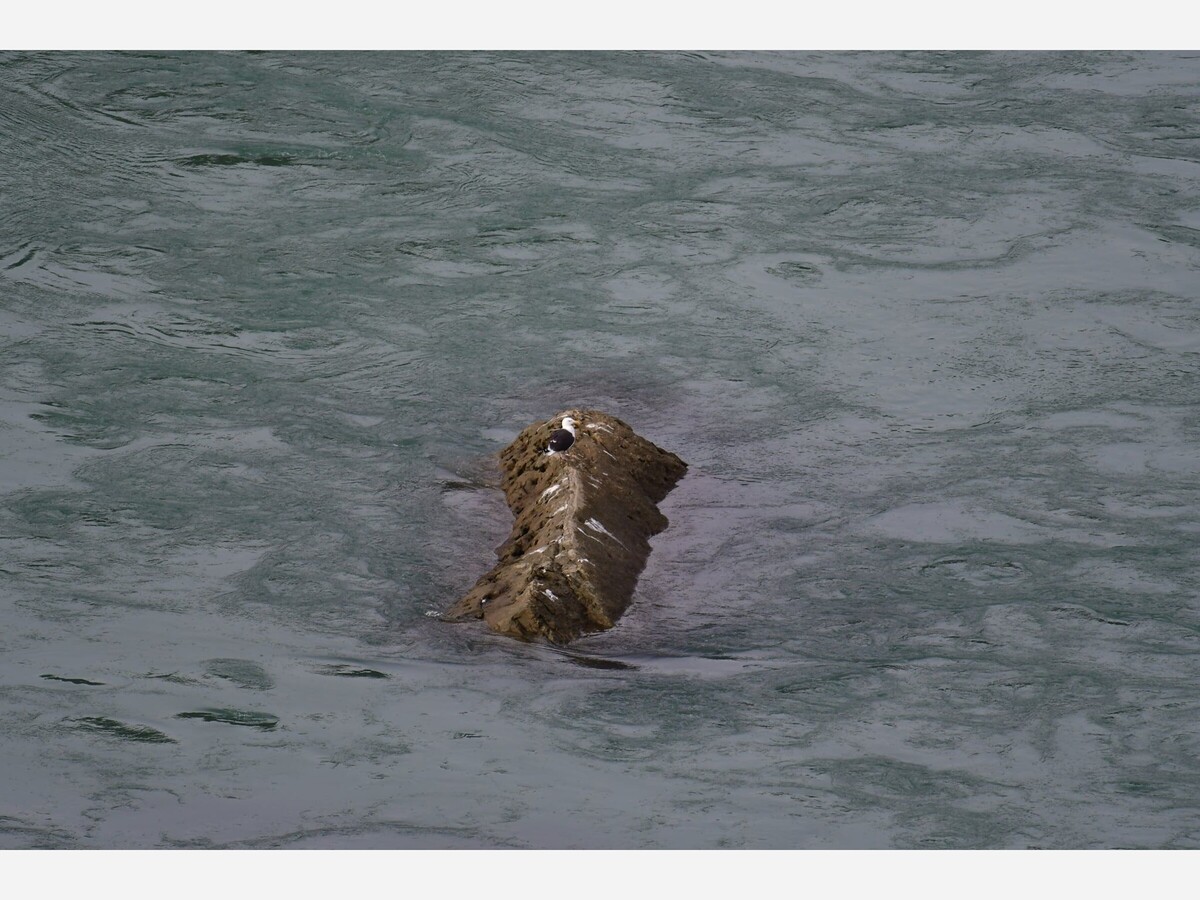
A Great Black-backed Gull standing on an ice edge in the gorge is not “just a gull.” It’s a reminder that Niagara belongs to more than us. It’s a reminder that the river still gathers life at scale. And it’s a reminder that when we learn our own place—really learn it—we don’t just become better neighbors to nature. We become a more valuable community to humanity as a whole and there is reward in that, both psychological and economical.

Patchy rain nearby, with a high of 70 and low of 43 degrees. Sunny in the morning, partly cloudy in the afternoon, clear in the evening,




How big are the air purifiers going to be at the Duke Center and at Schoelkopf? And, you'll be needing just more than one, of course, depending on the size.