Image
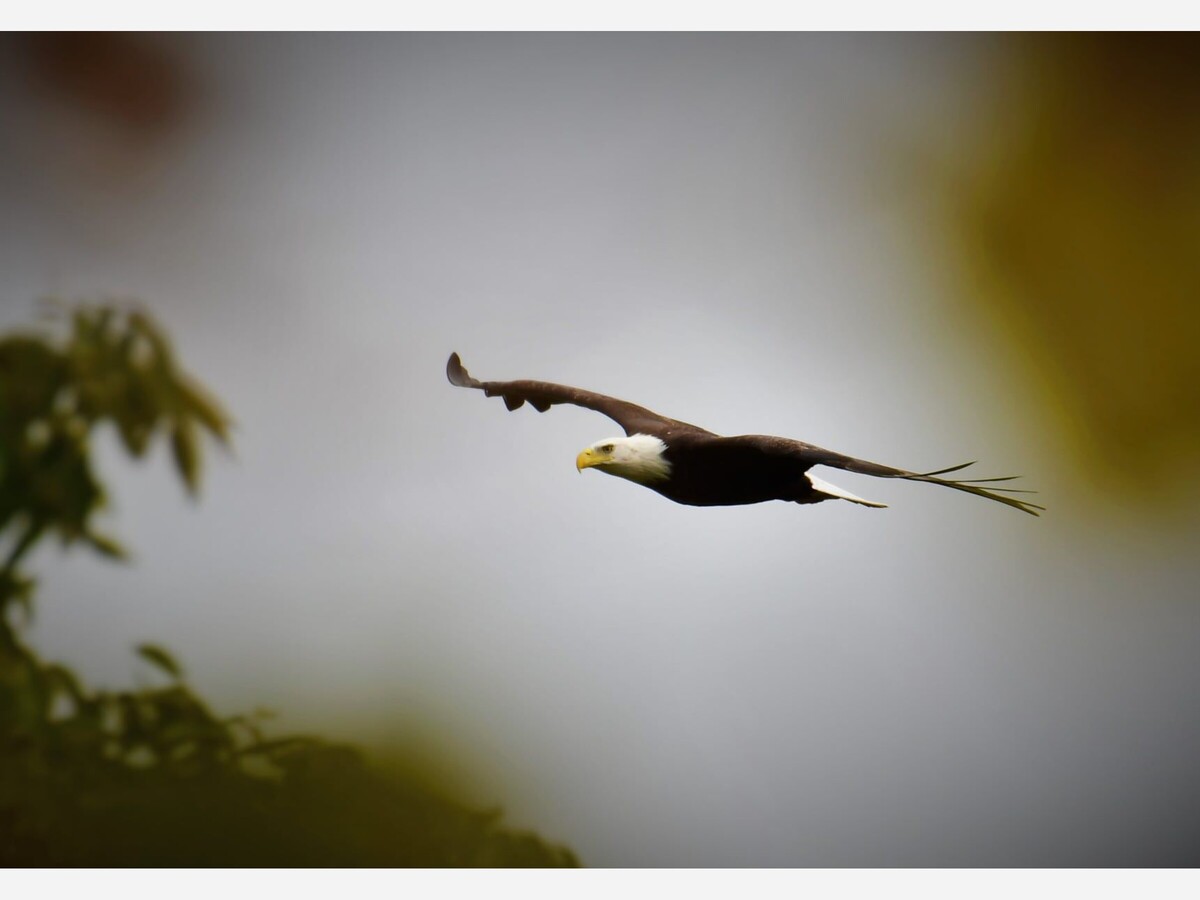
Photo by Jeffrey Flach
(Editor's Note: The above photo was taken by Jeffrey Flach, a Niagara Falls raconteur, Army veteran and hostel proprietor. When he gets a good bird image, he will share it here.)
By Jeffrey Flach
Special to the Express
Chicago honors the peregrine falcon as its official city bird, and Seattle formally adopted the great blue heron as its official city bird—proof that cities can choose a living symbol that reflects both place and identity. Niagara Falls should do the same, and we should choose the one bird whose story most perfectly mirrors our own: the bald eagle.
Niagara has always been a place where power concentrates—water gathers into a single river, then thunders over the cataracts, and the wind above the gorge gathers the great birds that live on edges: edges of seasons, shorelines, and sky. Among them, none has carried more meaning here than the bald eagle. Long before the Falls became promenades and power stations, early observers described eagles as part of the everyday drama of this place. In the late 1700s, naturalist Thomas Pennant wrote of “multitudes” of eagles below the Falls, drawn by carcasses swept over the cataract—an image both wild and unforgettable, as if Niagara itself was feeding the sky.
As the young United States searched for symbols worthy of its ambition, the eagle rose with it. The bald eagle became the centerpiece of the national coat of arms, and Niagara Falls became one of the most recognizable landscapes on the continent. It is no accident that early American print culture fused these two icons—bird and waterfall—into a single national image. Ornithologist Alexander Wilson even depicted a “white-headed” eagle perched above Niagara Falls, binding the eagle to this place in the public imagination.
But Niagara’s story—like the eagle’s—did not remain frozen in a romantic postcard moment. The same geography that makes Niagara excellent for wildlife also made it excellent for industry: concentrated flow, concentrated energy, concentrated settlement. Over time, industrial contaminants and pesticides entered the Great Lakes system and Niagara River corridor. Organochlorines—including DDT—moved up the food web and devastated birds of prey through reproductive failure. The eagle’s disappearance was not just a loss of a species; it was the loss of a presence that had always felt right above this gorge.
Then came the turning point: the long, difficult work of responsibility. DDT was banned, and New York paired regulation with direct restoration, including the “hacking” program that released young eagles back into suitable habitat. Recovery was not an accident—it was an act of stewardship, science, and perseverance.
And now, the most powerful part of the story: the bald eagle has returned to Niagara as a breeder—not just passing through, but reclaiming habitat. Monitoring in the Niagara River Area of Concern documents eagles using Strawberry Island in 2011 and nesting there by 2013, with protections put in place to support that success. Today, the eagle’s story is visible again: winter sightings along the river, eagles over the gorge, and protected nesting territories in the Upper Niagara.
This is where Niagara Falls must recognize the symmetry. We were once a global emblem of power and innovation—an astonishing natural wonder that also became a symbol of what human ingenuity could build around water and energy. But we are also a post-industrial city, living with the consequences of past decisions and the responsibility of what comes next. The eagle’s arc—abundance, decline, near-loss, and return through deliberate stewardship—is our arc too.
That is why I believe the bald eagle should be adopted as the official bird of the City of Niagara Falls. Not as a hollow slogan, but as a declaration of values: that we remember what was lost, we understand what caused it, and we accept that stewardship is not optional when you live beside one of the most famous natural places on Earth. The Falls are not simply scenery; they are a trust. And the eagle—once nearly erased, now rising again—should become our phoenix, a reminder that recovery is possible when a community chooses to take responsibility.
Let Niagara Falls be the city that looks up—not only to admire the bird, but to learn from it. Let us recognize the bald eagle as our emblem of resilience and our call to reclaim identity: to restore, to protect, and to lead again—worthy of the Falls, and worthy of the world watching.

Overcast , with a high of 49 and low of 32 degrees. Overcast in the morning, partly cloudy overnight.
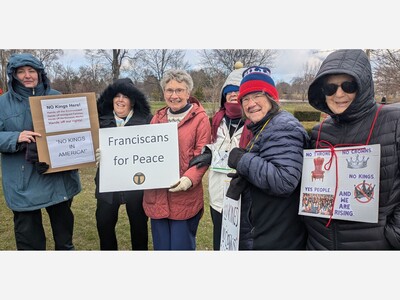

Thanks for covering this event. Maybe next time I will send you a drone picture of all 200 of us, and you can then post that.
Does anyone know the proper process in Niagara Falls, NY for getting bulk trash or debris removed from a private yard? I’m trying to figure out who handles it and what steps residents are supposed to follow.

I would say organize a group of people to address the property you are concerned about and bring it to the curb on May 9, the annual Niagara Beautification Commission cleanup. Casella will pick it up.