

Image
Investigative Post
Over three years, Niagara County spent less than half the $8 million it received to battle the ravages of opioid addiction.
Those funds, originating from settlements to lawsuits against drug manufacturers, came in two pots — one over which the state exercises oversight, another over which counties have direct control.
County officials told Investigative Post they’d allocated nearly 90 percent of the latter — money the county received directly from the lawsuit settlements with no state oversight, but with rules mandating that funds be spent on opioid abatement. County officials have refused to sufficiently detail how the money was spent.
Meanwhile, as of May, the county had spent just 2.5 percent from the other pot of money, according to state and county records, leaving more than $4 million unspent in the fight against the epidemic.
In that time, at least 217 Niagara County residents died of overdoses, according to Center for Disease Control and Prevention data.
“There’s no excuse,” said David DiTullio, director of operations for Niagara Gospel Rescue Mission, a men’s homeless shelter in Niagara Falls, who said he didn’t even know the funds existed.
“If there’s money available, why are we not doing something?”
Investigative Post began requesting interviews with county officials on this subject last October. Laura Kelemen, the director of mental health, has refused to sit for an interview. So has Kevin Schuler, the county’s public information officer.
Last Tuesday, the county legislature voted to approve $2.43 million in funding for three organizations using the state’s pot of money, according to public records.
In a statement sent last week, Kelemen told Investigative Post the county received no proposals that met the qualifications for grant funds in 2023, when the money first became available. The county discussed funding a program at Mount St. Mary’s Hospital in Lewiston, she said, but those conversations stalled. A spokesperson for Catholic Health told Investigative Post that the program never materialized due to costs.
Meanwhile, those living on the street told Investigative Post the county’s anti-opioid funds have yielded little, if any, assistance for them.
Joseph Gardner, 53, has been living in an encampment above the canal in Lockport for two months. He’s heard of the opioid settlement funds and believes funding should go towards neighborhood programs or places to live.
“It could be housing for six months,” Gardner said.
Following Tuesday’s county legislature meeting, an Investigative Post reporter approached minority leader Jeffrey Elder with expenditure reports showing limited spending of state funds over three years. He said he found the information “concerning.”
“We definitely want to make sure the funding is spent in the correct way,” Elder told Investigative Post. “We need to make sure we have the proper oversight of that.”
In 2023, Niagara County’s overdose death rate ranked ninth statewide, surpassing Erie County’s and nearly double the state average.
In 2024, local deaths in Niagara County decreased significantly — to 71, down from 92 in 2023 — but its death rate climbed to sixth highest in the state.
In 2025, deaths continued to decrease by significant margins, though its rate still hovers higher than the state average.
Among minority populations, the toll was even higher. In 2023, 1 in 967 Black Niagara County residents died of overdose, according to federal Centers for Disease Control data. That’s more than double the rate of white residents.
The disproportionate death toll among Black Niagara County residents runs parallel to trends in Buffalo and Erie County, as Investigative Post reported last December.
In her statement, Kelemen wrote that overdose deaths in the county have declined dramatically in the last three years, which Investigative Post confirmed through analyzing federal data. Kelemen attributed the decline to the success of programs funded by the direct share of opioid settlement monies.
New York’s opioid settlement fund was established under state law in 2021, after the attorney general successfully litigated against opioid manufacturers, such as Purdue Pharma, for overmarketing opioids and causing addiction rates to skyrocket statewide.
Over $3 billion is set to be distributed statewide through 2040. By law, opioid settlement funds must be spent on abating the opioid epidemic, as well as supporting addiction treatment, prevention and recovery measures.
Regional abatement money — the funds over which the state exercises some oversight — represents 15 percent of the state’s total funds distributed statewide by the Office of Addiction Services and Supports. The money flows to a county’s mental health department. Together with a committee of community members, the department reviews and accepts proposals for projects to then be approved by the county legislature.
Every year, the county must share a spending report with the state.
The Office of Addiction Services and Supports has delivered $4.2 million in regional abatement funds to the Niagara County Department of Mental Health since 2023.
Kelemen told Investigative Post that $3.1 million of this $4.2 million has been spent or committed to projects.
That sum includes the $2.43 million approved last Tuesday. That funding will support a multi-year contract with Peaceprints, Community Missions Inc., and an outreach program within the county’s mental health department to help individuals coming out of jail find housing as well as mental health and addiction treatment.
Then there are the “direct share” funds — money awarded directly to counties and other municipalities as co-litigants with the state in the lawsuits against the pharmaceutical companies.
Kelemen told Investigative Post that $3.8 million of these funds has been received and $3.4 million spent or assigned to multi-year projects. But she refused to provide Investigative Post with an accounting of where the money had gone.
According to public records, the county legislature approved the use of direct share funding to pay for five grants totaling $844,636, in 2025. These are:
Toni Smith, state director of the advocacy organization Drug Policy Alliance, said counties can be as transparent as they please when it comes to reporting direct share spending, which they’re required to do online annually.
But since no state oversight is mandated over these funds, it’s hard to know what other spending is happening.
“There’s definitely a patchwork of ways that counties are and are not reporting on the use of funds,” she previously told Investigative Post.
Niagara County is not the only local government to be slow in spending its regional funds. Investigative Post previously reported that the City of Buffalo had spent less than a third of its $6 million allocation from the state, as of last December. Using these dollars, the city purchased lawnmowers, snowblowers and speakers for the city fireboat.
In March, an Investigative Post investigation found that suburbs in Erie County were similarly sluggish: Five of Erie County’s largest municipalities had spent less than half of the $417,990 they’d received in regional funds. A few municipalities, the Town of Tonawanda and the Town of Lancaster, reported spending nothing at all.
As of Dec. 2025, the state’s unspent funds resulted in more than $35 million in accrued interest, which advocates and watchdogs fear could get swept into the state’s general fund to be used for purposes other than fighting the opioid epidemic.
That’s exactly what happened in Nassau County, when county officials moved $13.7 million in interest accrued from opioid settlement funds into the county’s general fund. Under pressure from members of the Nassau County legislature and a number of local citizens, the county administration returned the money to the opioid settlement fund in May.
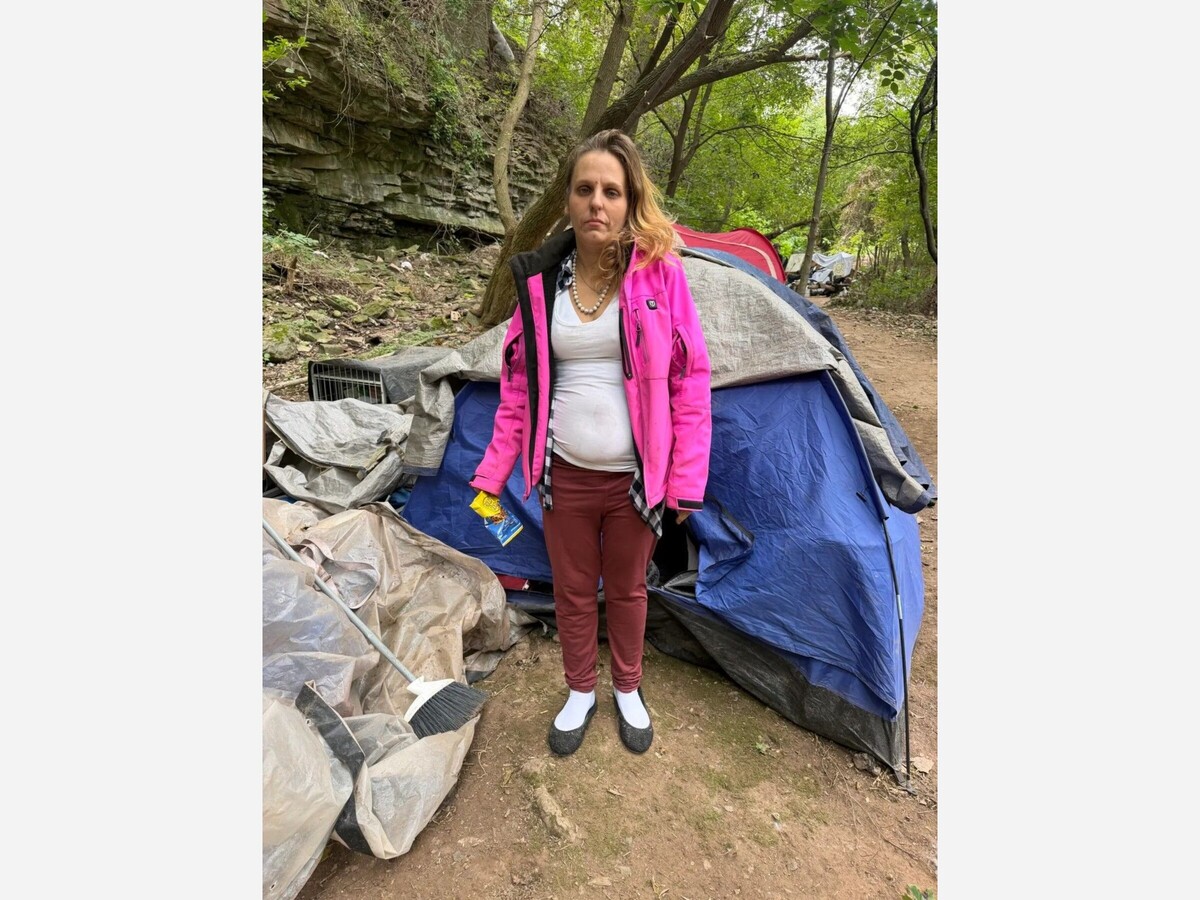
Prior to becoming homeless, Deanna Gibson, 37, was a chef living in Phoenix, working two jobs and living in a $1,400-a-month apartment. She’s been living in the Lockport canal encampment for the past four years, and is now entering her second trimester of pregnancy.
Gibson said the lack of local programs for those struggling with addiction and homelessness is a problem that’s only gotten worse in the last year. Though fatalities are declining, she said there are many overdoses still happening, which she attributed to a lack of Narcan and a needle exchange program.
“I’ve seen a lot of overdoses,” Gibson told Investigative Post. “I’m struggling immensely.”
She described the closure of Save the Michaels’ Lockport drop-in center this past spring as a “huge loss.” Save the Michaels offered Gibson a place to be during the day, to drop off laundry and an address to receive mail — a crucial step to getting an ID and employment.
She said she’d heard of opioid settlement funds. But, gesturing to the tents around her, she said it was clear funds hadn’t reached those most in need of help.
“They’re looking at us like bums, like we’re not even trying,” Gibson said. “There’s nothing here.”
The Office of Addiction Services and Supports is auditing Niagara County’s use of regional abatement funds, according to the minutes of a February meeting of the board that helps to direct that spending.


Sunny, with a high of 59 and low of 45 degrees. Sunny in the morning, overcast in the afternoon, clear overnight.