58° and Overcast



Image
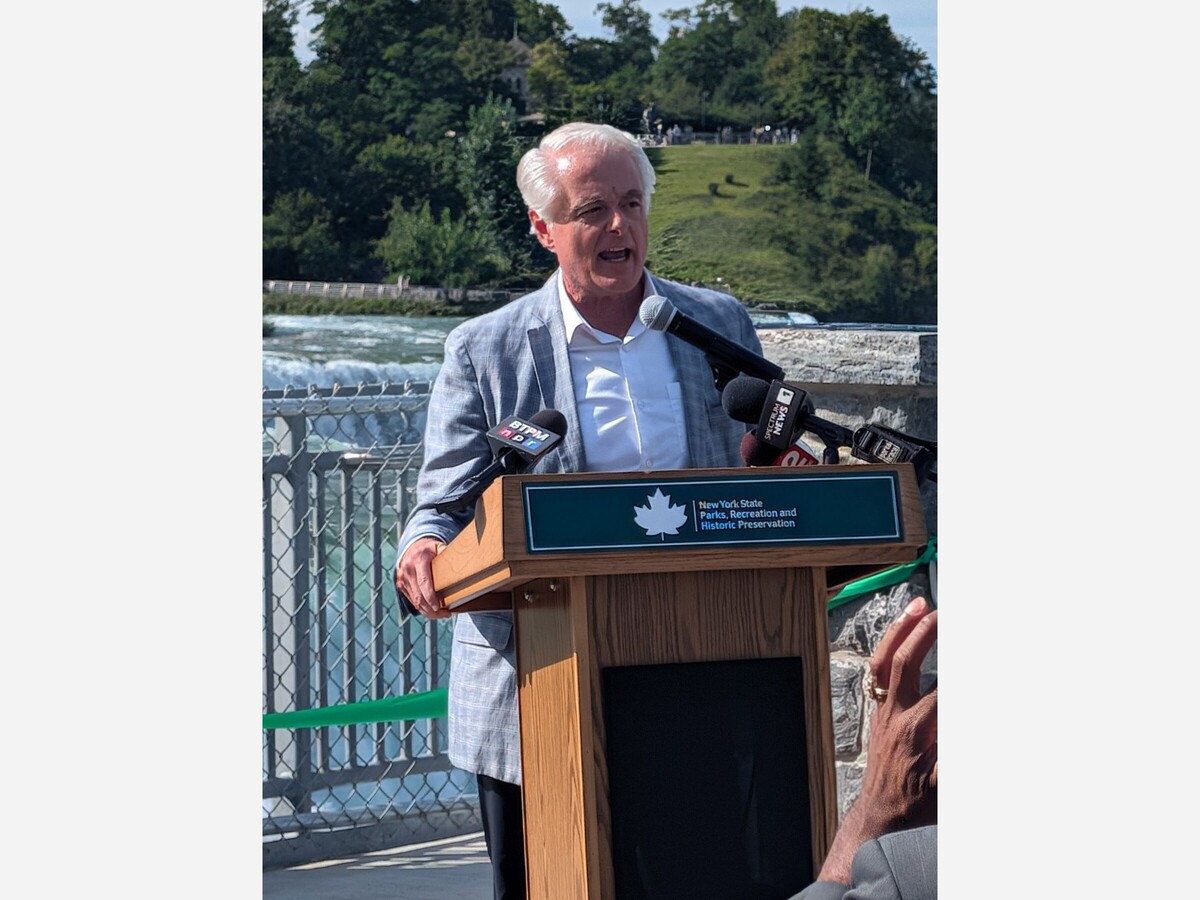
The Niagara Falls City Council did a whole lot of nothing Wednesday. The divided legislative body postponed voting on numerous items because either it did not have enough information or it couldn’t comprehend the role of councilmember or the information being presented.
A $13,194 traffic safety grant passed after councilmembers Vincent Cauley and Bridgette Myles attempted to postpone because they wanted to better understand how the grant would be used.
“I am not against public safety but it is about accountability and transparency,” Cauley said.
An award to Azar Design Co. to consult on alley reconstruction using State Tourism Route Funds was postponed with Councilmember David Zajac moving and Cauley seconding. The plan was to spend $63,000 in state taxpayer funds to have the firm perform engineering, design, bidding and construction oversight for alley reconstruction.
Councilmembers, after Union President Tim Huether spoke, questioned whether work could be done by city employees. Only Councilperson James Perry opposed the motion to postpone.
A request from the Mayor for the council to authorize $30,000 to Niagara Orleans Land Improvement Corporation (NORLIC) for dedicated staff was postponed because the council wanted guarantees that if it kicks in, North Tonawanda, Lockport and Niagara County will as well.
Acting Corporation Counsel Tom DeBoy argued that the agreement was written in such a way that if one entity didn’t participate the others could back away. Only Councilperson James Perry opposed the motion to postpone.
A planning grant for the final phase of Brownfield Planning along Buffalo Avenue was approved after a motion to postpone failed. Cauley wanted more information. Myles wanted professional staff to explain the $166,500 project.
An agenda item to form a Local Development Corporation to oversee the development of Centennial Park, a proposed multi-use entertainment facility to be built a half-mile west of the tourism district, was postponed by a 4-1 vote with Perry against.
Councilmembers expressed concern the LDC could be an expensive legacy when the facility is predictably not profitable. They also worried that the proposed 5-seat board would have 3 seats that could ultimately be controlled by the mayor meaning even if he loses a bid for reelection he would still have political control.
A public hearing to authorize a trash fee increase was scheduled by a 5-0 vote. That's a hearing, not a rate increase.
Finally, a motion to retain outside counsel for those times the council wants something different from DeBoy was postponed 4-1 with Perry against. The proposed law firm would be budgeted $4,000 over the remainder of the year, billed hourly. Given the retainer and other fees, the expenditure would likely result in fewer than 5 hours of consultation.
DeBoy departed the meeting before speakers for the good of the community, affording him the chance to retreat to his office and work on minutes and also avoid being harangued by speakers.
The Express used an AI device called “Pocket” to create this summary. Here it is, corrected for grammar and facts.
***
This transcript covers a Niagara Falls City Council meeting dominated by public opposition to the creation of a Local Development Corporation (LDC) for the Centennial Park project and concerns regarding the oversight of city grants and infrastructure contracts.
A significant portion of the meeting focused on Item #5, the formation of a separate corporation to manage the proposed $210M Centennial Park project.
The meeting was characterized by a high degree of distrust between the public and the administration. Multiple speakers characterized the city's management as a "circus" and "criminal," citing the unfinished $4M dog shelter on land they perceived as contaminated as a primary example of mismanagement. Cauley emphasized that their skepticism is not an opposition to safety or development, but a demand for transparency and accountability for taxpayer funds.

Overcast, with a high of 65 and low of 53 degrees. Overcast for the morning,