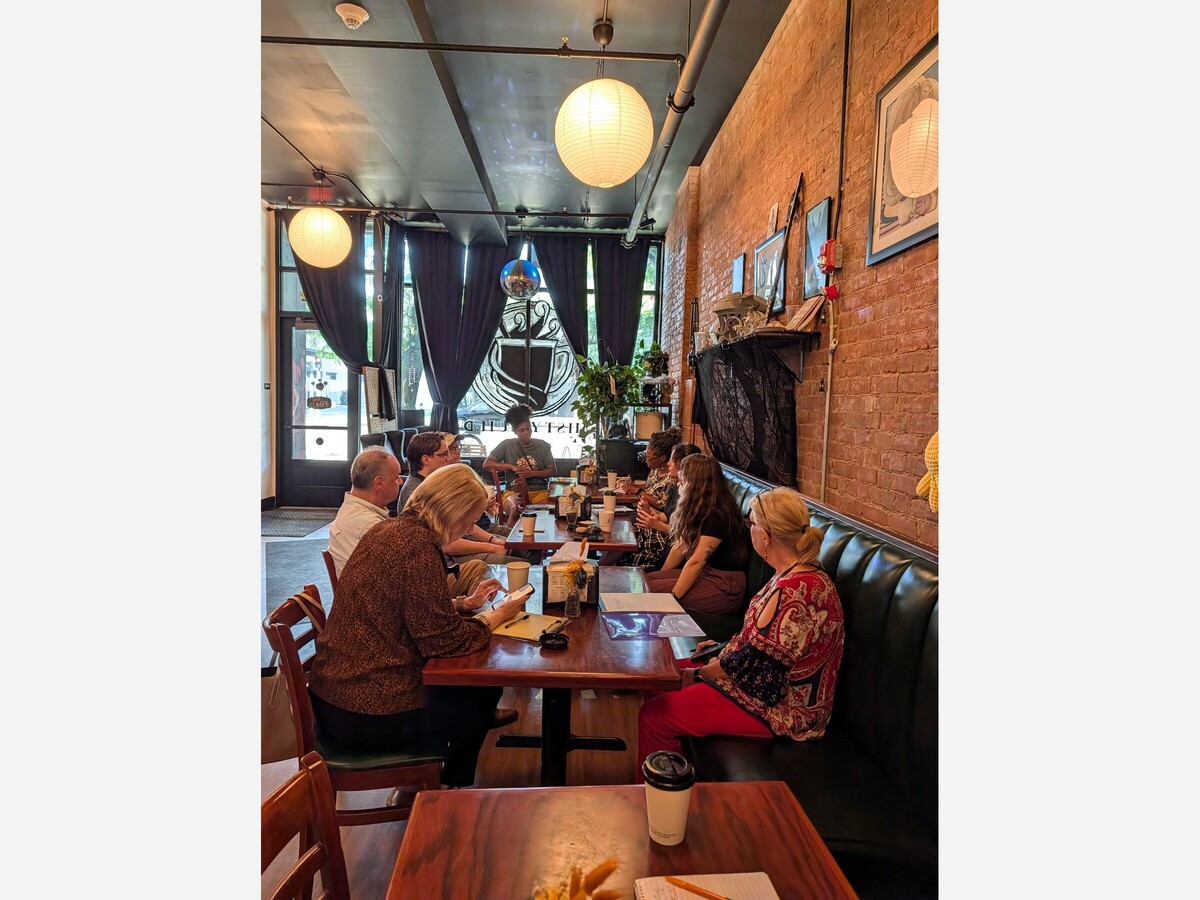
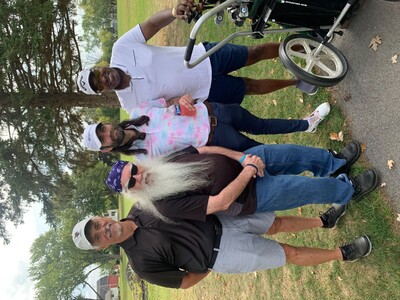
Preservation Buffalo Niagara hosted Pastries for Preservation Thursday and seems to have a lot going on.
The clearest theme was moving from reactive, last-minute preservation fights toward broader public access, stronger landmark protections, qualified local contractors, and sustained investment in historic sites. The meeting is at 8 a.m. on the first Thursday monthly.
Key developments
- Historic-preservation law revisions from Josh Poole of the Niagara Falls Historic Preservation Commission:
- Draft revisions would allow recognized preservation organizations to submit landmark applications, rather than limiting that power to property owners or the preservation commission.
- A public recommendation pathway would let residents flag buildings for review.
- A new appeal mechanism is proposed when the commission supports landmarking but City Council rejects it.
- The urgency stems from repeated near-losses of significant buildings before formal protection can be secured.
- Threatened historic property on Buffalo Avenue
- The Arkush house on Buffalo Avenue is undergoing demolition by neglect. It is owned by the Merani family which has the adjacent hotel on Buffalo Avenue.
- Demolition has been discussed to expand hotel parking, despite apparent unused capacity in a lot that is rarely full. The proposed gain was described as only several spaces.
- The building’s potential loss galvanized preservation advocates and prompted discussion of a more flexible, proactive preservation strategy.
- Love Canal
- A Love Canal commemoration is planned for September 11, marking an early phase of the crisis and bringing together people involved at the outset, media participants, and current voices.
- Nuclear waste, toxic waste, and federal protections remained unresolved concerns.
- Home-repair grant program
- A state-funded local renovation program is active in Niagara Falls, with roughly $40 million statewide available for this funding category.
- The program has begun building a local contractor base, though uptake has been slow because homeowners, contractors, and the wider community needed to be persuaded that the work and funding were viable.
- Participants stressed the importance of state certification for minority-owned, women-owned, veteran-owned, and service-disabled veteran-owned businesses. On a hypothetical $2 million award, 30%, or $600,000, may need to go to qualifying firms.
- Contractors were encouraged to pursue certification, which was said to take roughly 35 to 40 days.
- Preservation work and contractor caution
- The Tatler is approaching its 150th anniversary and plans an October celebration alongside a capital campaign.
- Tatler needs include infrastructure, insulation, exterior restoration, and correcting prior inappropriate work, including vinyl siding installed on a historic structure.
Public programming and engagement
- Propher Isaiah House: Saturday tours are rising from a previously negligible base. A fashion show is planned for Sept. 14, beginning at 11:00 a.m., to draw new audiences and expand awareness of the site.
- Grave conservation: A visit to Catherine’s grave in Geneva demonstrated the use of D2, a biological cleaner, to remove growth from stone without harsh methods. Any work on gravesites requires permission from the owner or responsible authority.
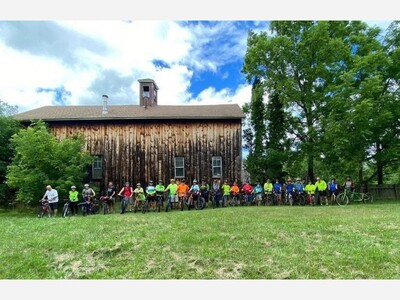
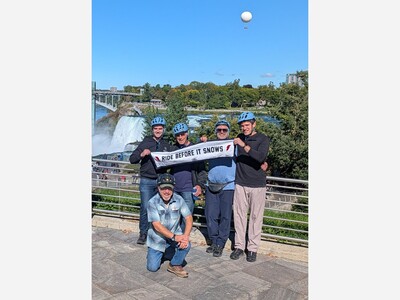
- Mobility programs: Free adaptive-bike programming has run at senior residences, including Wrobel Towers. Awareness remains the main barrier.

 58° and Overcast