
 62° and Clear



Image
By Bob Confer
Special to the Express
If your neighborhood was graced by carolers during the holidays count yourself as lucky. The singers’ beautiful voices filled the void of silence that otherwise afflicts Western New York’s winters.
If your neighborhood is graced by nature’s counterpart to those musical souls you’re just as lucky.
Other than some rather basic sounds, most species of birds remain quiet this time of year. It’s a little too cold to focus on attracting the opposite sex and marking territory. That, and their attention is purely on the questions of survival: How do they get the calories they need for this cold weather without expending too many of those energy points that are precious and few this time of year? How do they hide from predators when the trees and grasses are stripped of foliage?
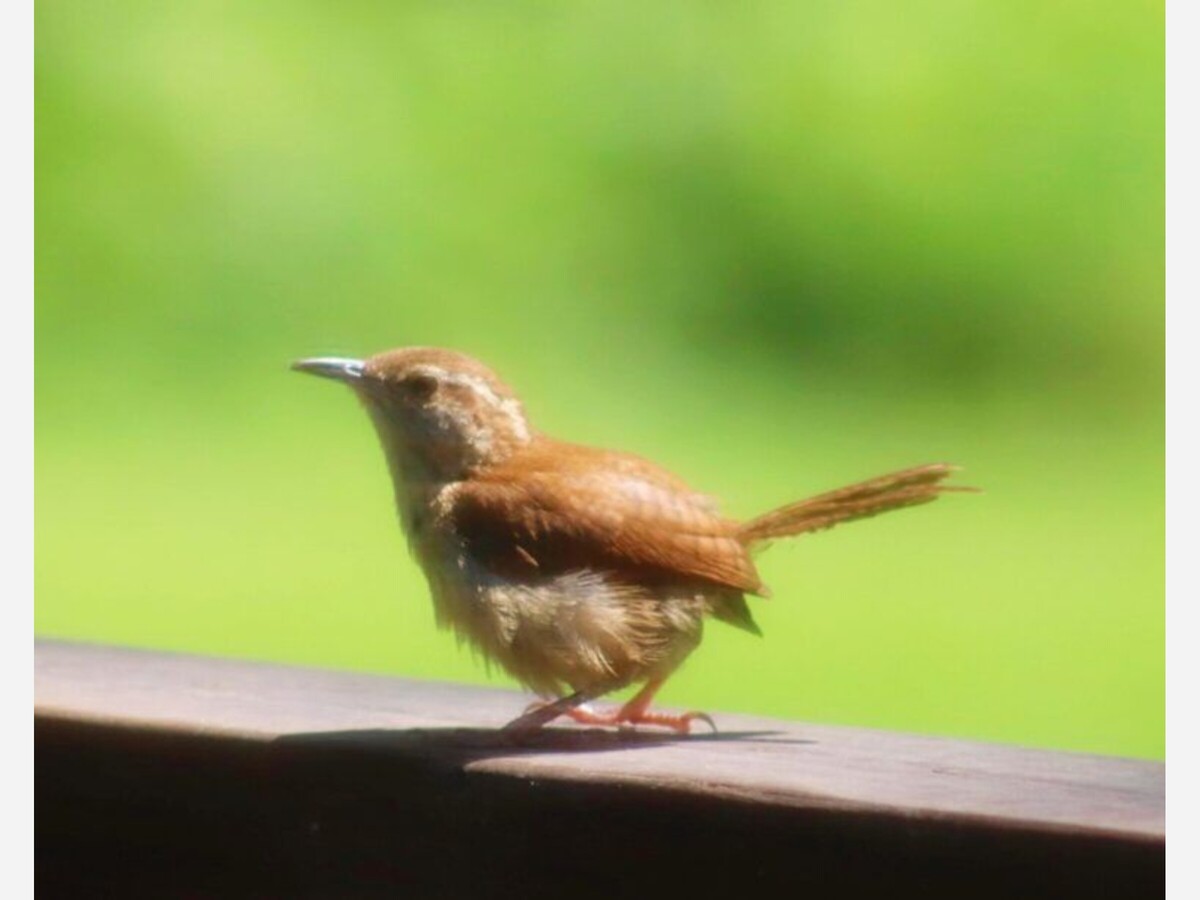
But, there is a bird that thinks differently, acts differently, and sounds differently this time of year. That would be the Carolina wren, the tiny caroler of our winters.
The males of these wee creatures sing all year long, all day long, to protect their territory and to maintain the bonds of attraction with their ladies. A little bit of vanity and a little bit of pride. The latter may explain why these wrens are the rare birds that mate for life, joining other species like ravens, bald eagles, barn owls, and mute swans. They raise their young together, forage together, and travel together, year in, year out. While most species of birds will be monogamous for a breeding season, these lovebirds are monogamous until the end.
The sound – not the song – of the Carolina wren is quite similar in tone, pitch, and volume to the sound of the northern cardinal. The song is all its own, though. The male wren emits an almost scolding song that bird books have described as tweedle, tweedle, tweedle or tea-kettle, tea-kettle, tea-kettle. They will often repeat this series many times in a row and often without provocation. That tune can reach, and even exceed, 90 decibels.
It’s a lot of voice coming out of a small package. They may be the largest of the eastern wrens, but they are still quite diminutive, measuring, at most, five and a half inches from tip of the beak to end of the tail. They are told apart from the far more common house wren by their chunkier build and brighter coloration. Carolina wrens have a warm brown top, a chestnut-colored, even yellowish, underbelly, and a stark white eyebrow.
You will find them in the thick brush and the edges of young-growth woodlands. They will also frequent backyards that have hedgerows or dense shrubs. Their nests are built in crevices and also in larger cavities, such as birdhouses, mailboxes, and even the most unusual of places – last summer, I had a couple try making their nest under my grill cover.
A bird more at home in the southeastern United States, the Carolina wren is a relatively new addition to Western New York’s naturescape. We are at the very northern edge of their range. Historical records show that they were rarely seen in upstate New York until the 1950s. Then, their numbers really began to increase in the 1970s. Between the state’s first breeding bird atlas (covering observations from 1980 to 1985) and the second (2000 to 2005), the sprite’s range increased threefold. Their northward advance can be attributed to the growth of the birdfeeding hobby (they love suet and mealworms), the transformation of smaller family farms to woodlands, and, some say, climate change.


Patchy rain nearby, with a high of 78 and low of 53 degrees. Sunny during the morning, partly cloudy in the afternoon, clear during the evening,




i wish you would print something about eliza. i tried to find out something about her, but couldn't. since i'm home bound, i can't go to the park. i did google her name & the only thing that came up is this article. i am intrigued!