

Image
Traditionally, for community journalists, school board meetings are the most boring. School budget meetings are even more boring than that.
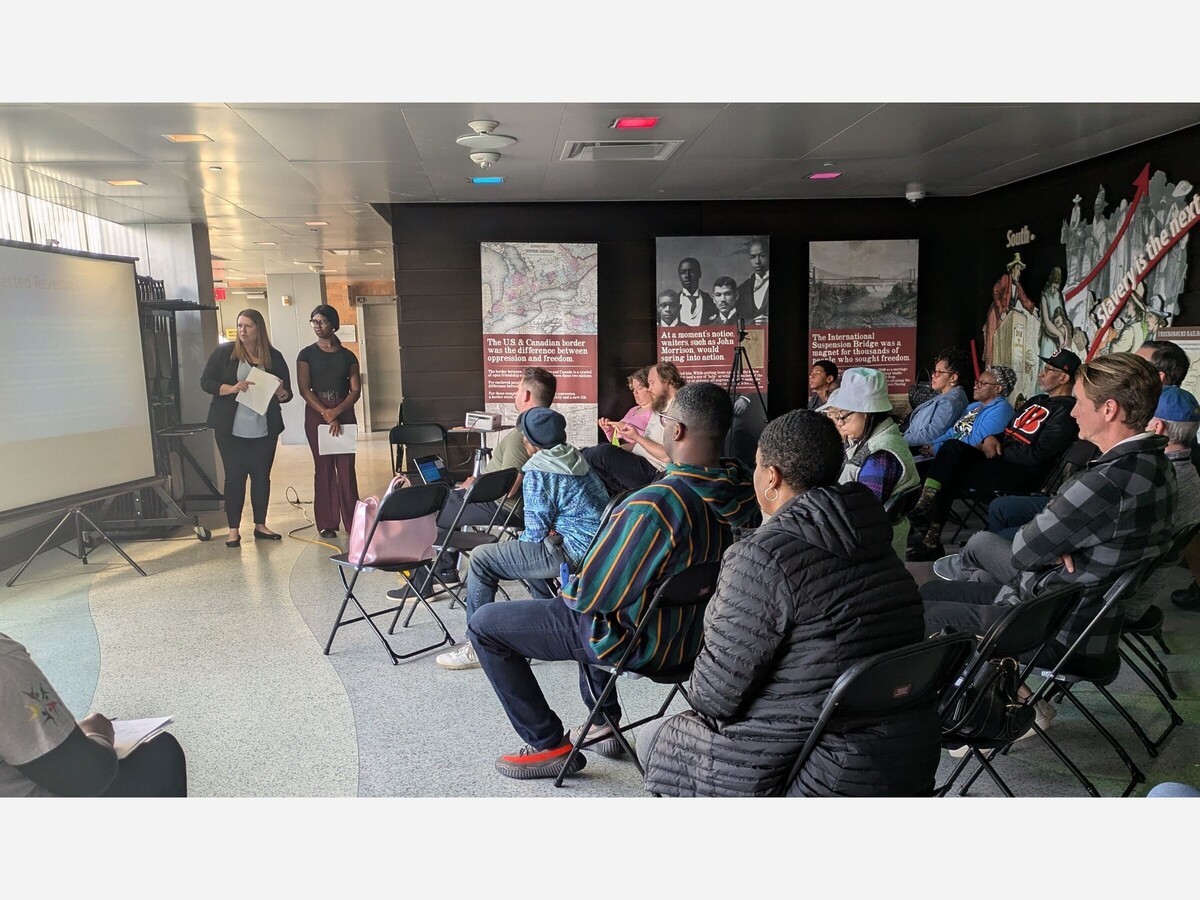
With that background, the Niagara Community Information Group hosted its monthly meeting Monday at the Underground Railroad Heritage Museum and heard Administrator for School Business Julie Jacklin and Budget Manager Markesia McCreary of the Niagara Falls City School District explain the proposed spending plan. The presentation, for about 50 people, took an hour.
Interestingly, Jacklin paused for questions, answered all everything and knew many complicated numbers off the top of her head.
She was aided by a Powerpoint. Even though the projector screen and meeting space was reoriented in an attempt to deal with the sunny glare, the screen was hard to see.
School Board Member Rob Bilson, a newcomer to the meeting, interrupted early on and demanded to know who from NCIG was responsible for technology.
NCIG’s Michael Barksdale, who is running for a seat on the board against Bilson, spoke up to say that the room had been reoriented and the nonprofit organization did the best it could. There was a tone to Bilson’s voice that communicated he wasn’t happy to be there. He came across as that corporate executive who wanted everyone in the meeting to know mistakes had been made and blame would need to be assigned. To his right sat fellow board member Nick Vilardo and recently appointed new Superintendent Stan Wojton, who hasn’t started in his new role yet.
Other than Bilson’s outburst, the trio offered no comment or questions.
The tax levy proposal upon which citizens will vote is for $26.407 million, $577,529 under the tax cap. If the district were to exceed the cap, Jacklin said, it would need a 60% majority at the polls during the May 19 budget vote.
There are 7 candidates for 4 open seats on the board of education. Voting is slated for Tuesday, May 19.
Jacklin said the budgeting process this year is complicated by the lack of a state budget. The initial proposal from Gov. Kathy Hochul was amended in the legislature. It is the legislative budget that is used for planning purposes. Only about 15% of the district budget is funded by local revenue. The remainder is state aid.
To make ends meet this cycle, the district tapped into fund balance and reserves for $9 million, Jacklin said. On the surface, this may appear to be cause for concern, but it is important to acknowledge $40 million in fund balance remains. Even with that drawdown, the district’s underlying reserves remain far above what it had back in 2021-2022.
Options to bridge the budget gap include raising taxes, cutting services or using fund balance. The last option is the most painless, especially in a district where school taxes are among the highest in our region.
An interesting place Jacklin said the district finds some savings is from “breakage.” That is the technical term for what happens to spending when a staff on a higher salary step departs and is replaced by new hires who typically cost less.
With this budget almost put to bed, Jacklin said planning has already begun for 2027-2028.
The district’s tax levy has been unchanged since 2014 but taxpayers may feel like their bill is increasing because the STAR exemption is decreasing. STAR, by design, is being phased out.
Upcoming events sponsored by NCIG include:
A forum at 6 p.m. Wednesday at Niagara Falls Library on knowing your rights when it comes to student discipline and suspensions.
A candidate forum at 6-8 p.m. Tuesday, May 12 at the library. All candidates have been invited but only some have responded. School board members are among the most under-appreciated volunteers in any community.
Listed as candidates on the district website are:

Overcast, with a high of 65 and low of 51 degrees. Overcast for the morning, cloudy in the afternoon, clear in the evening, overcast overnight.