



Image
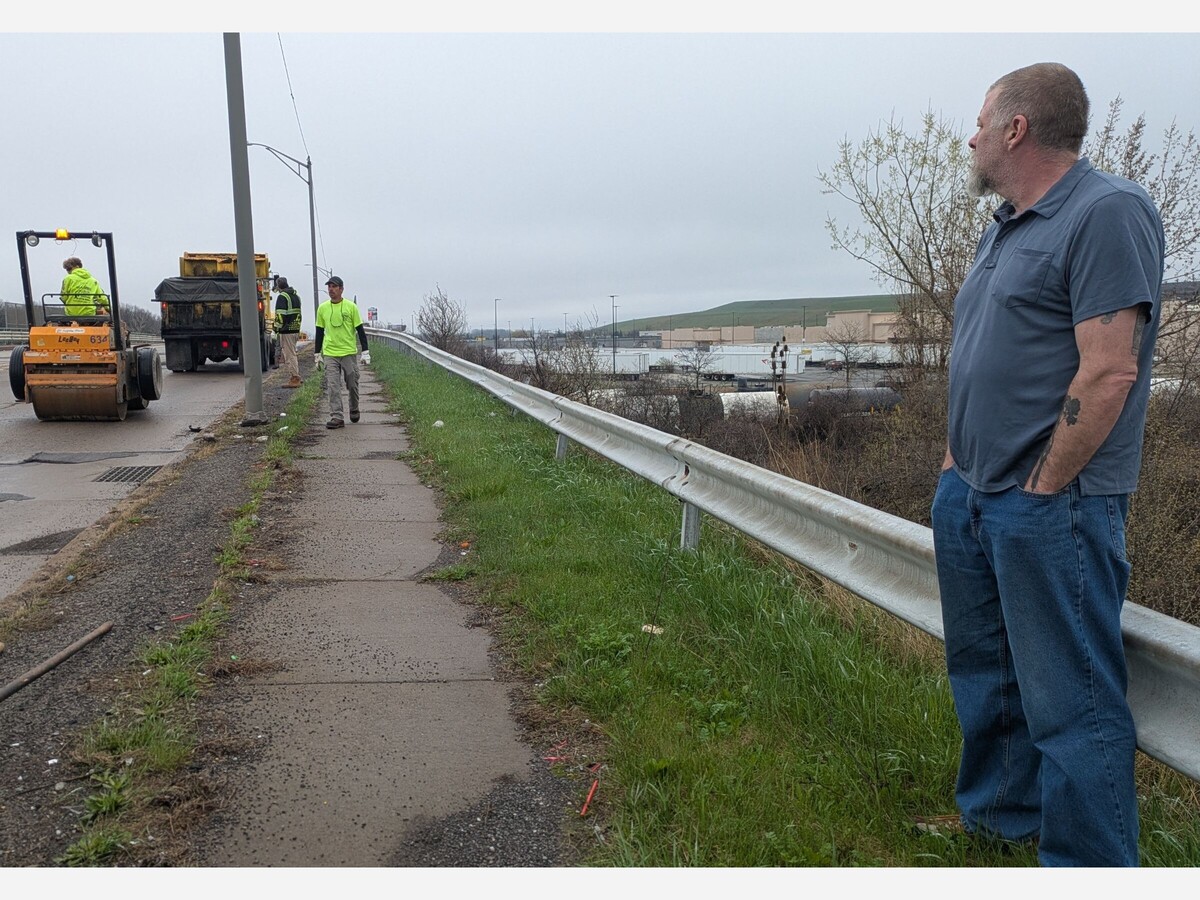
Niagara Express spent Friday morning riding along with Niagara Falls Deputy Superintendent of Public Works John Murphy.
The ride was coordinated by the mayor’s office through the city administrator. There were no promises or conditions. Murphy has been in his position for 9 months and, likely, has never dealt with the media or been coached on what to say, or not say. It was, in a word, refreshing to hear him speak unvarnished truth.
In the public interest, some of what follows is a bit filtered. It is logical to expect DPW Superintendent Kenny Tompkins has fewer days on the job than he’s served and Murphy might be the logical next choice.
The beginning
I arrived shortly before 9 a.m. at the Public Works complex on New Road and buzzed the intercom for the automatic gate. The Express standard is early is on time. On time is late.
“Pull forward and park on the left,” the friendly voice said before opening the gate at 8:47 a.m. Straight ahead was a single car tent filled with discarded televisions (You can bring your old TVs there, free of charge). To the left is the construction site where the new department headquarters is being built.
I entered the office, rang the buzzer and saw Murphy’s head pop up from behind a cubical barrier. He’s tall (everyone is to me, other than maybe Brian Archie). He shook my hand and we headed out.
“We’ll take my work vehicle, OK?” he said, leading me to his black SUV, a spare, cluttered work vehicle.
Murphy has been with the city since 2008 coming to forestry from jobs at Al Maroone and Doyle Ford where he was a union mechanic.
(Editor’s note 1: Murphy’s vehicle is equipped with anti-pothole technology which is accessible only to nonunion city employees. It floats on air. On this day we won’t bump over the tracks at Highland and Witmer. That’s why the mayor and city leadership don’t care about potholes. They also wear special glasses which enable them to avoid seeing burned out houses on 19th Street or trash. OK, sorry, I digressed. None of that is true. Sometimes I can’t suppress my humor. Take it in good spirit. We choose to live here. We also choose to love it and firmly believe we can make it better. We are the Niagara Region, the USA suburb of Toronto. Buffalo is our dying cousin from back in the day.)
Forestry
Murphy came in as crew, then became a crew leader and finally, foreman in the forestry department.
Trees are an important part of our city. Murphy, after leaving his dealership gigs, studied horticulture.
He was working for the city when a tree study was completed in the administration of Mayor Dyster. It never took root but is likely still relevant and needs to be revisited.
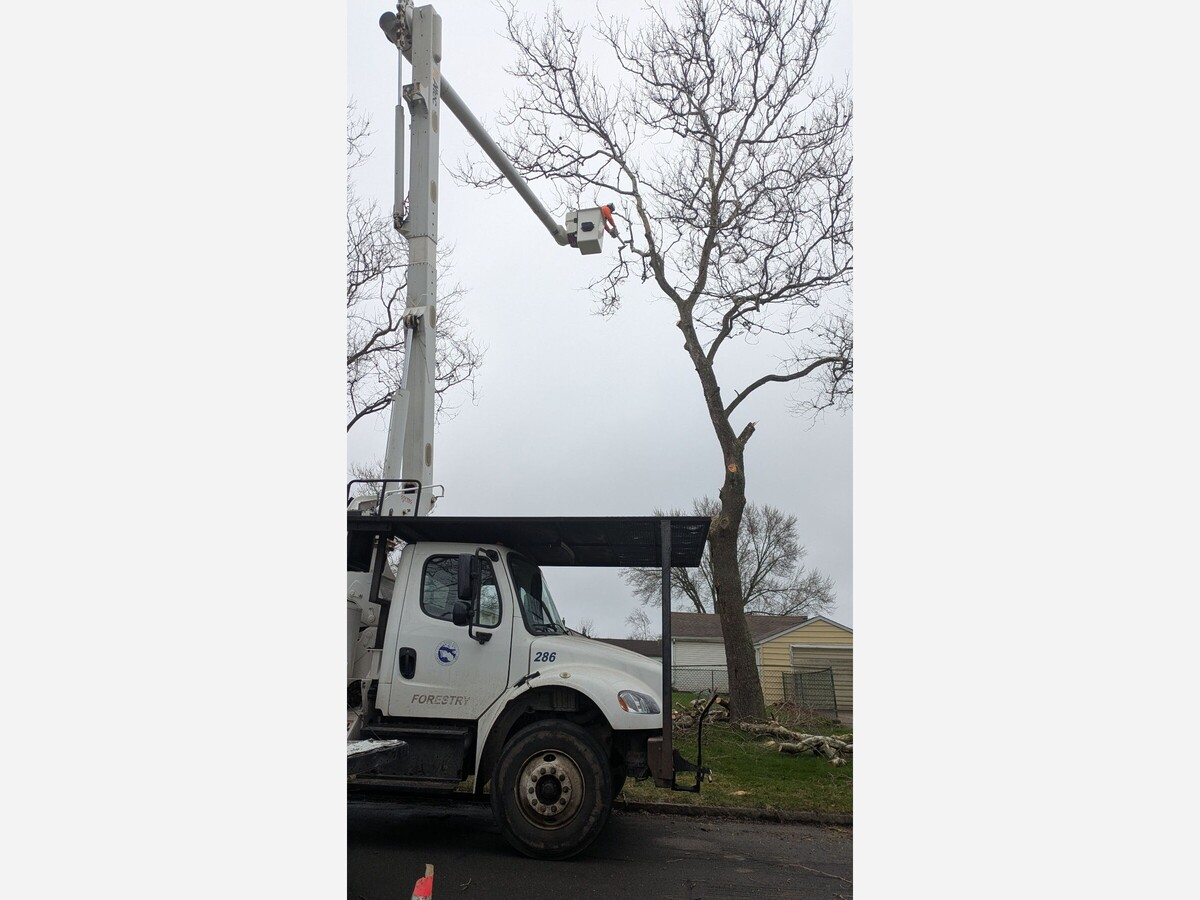
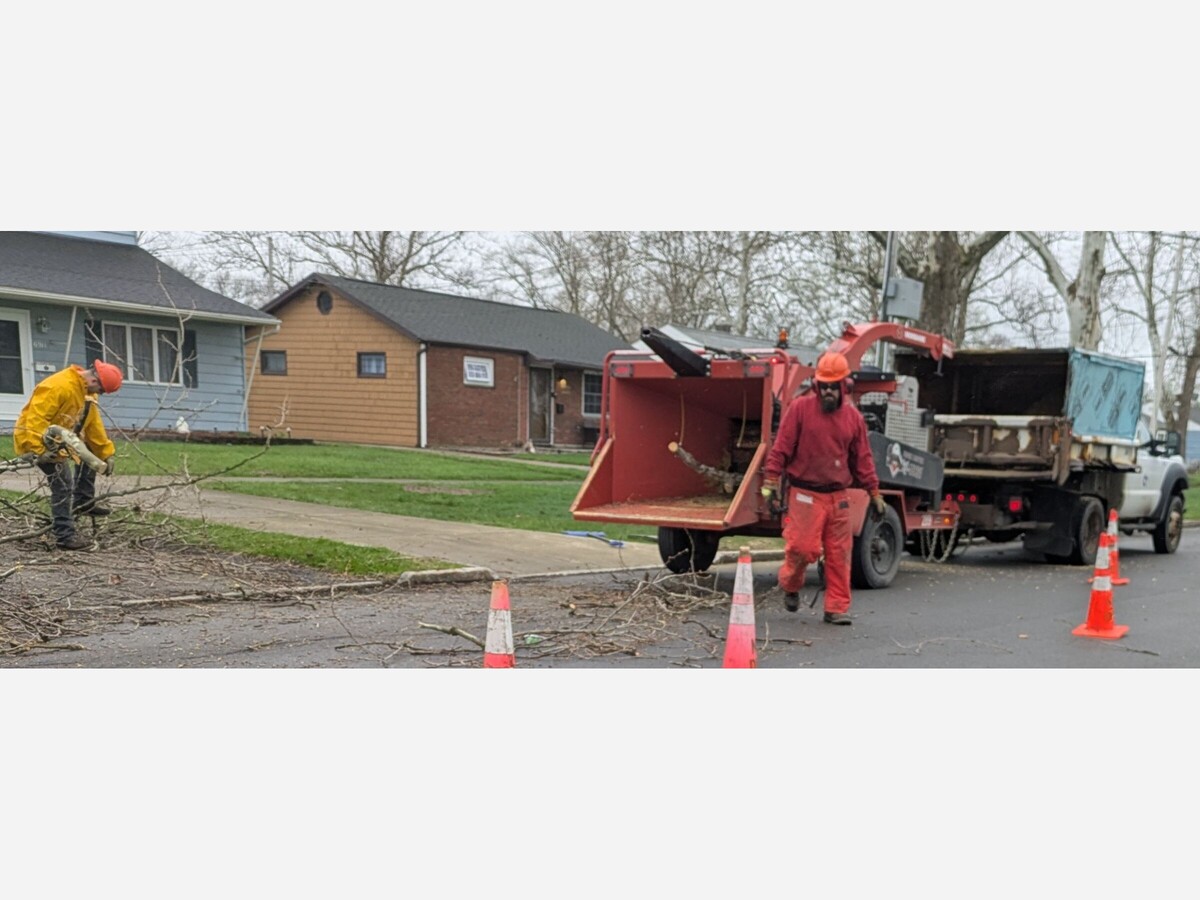
Forestry has just 3 men with 4 jobs open. There was a woman as well but she shifted to work at Hyde Park. On this day, we floated to Lindbergh Avenue and 70th Street where Tom Langer was in the bucket lopping top branches off a rotted sycamore. It was on the side of the street away from the utility lines, a relatively easy job where he could drop most on the grass and didn’t have to worry about a fence, garage or house.
Two workers on ground were hustling, feeding branches into a new-ish chipper behind an older truck. Even with lots of money spent from the American Rescue Plan and CHIPS funds, it is a large city with lots of equipment, some of it great, some of it not-so-much.
Forestry uses mostly Stihl saws but also has a two-man Husqvarna for those big jobs.
“Chain saws scare me. I own one and use it if I have to but I am afraid of it,” I said to Murphy.
“Good,” he said, “that’s the way it is supposed to be. They are dangerous.”
He's a man of few words but has spent enough time with a saw to never relax. They are like guns in a way. Plenty of fun but . . .
The chipper itself is another danger machine. Murphy said the previous one was bigger. This one takes a max-size log of 24 inches. The two workers on the ground gather small branches and feed them in. Then the younger man, learning the craft, unbuckles a cable with a hook on the back of the chipper which stops spinning. He pulls it 15-feet away where he stacks it with logs and hooks it to itself. His partner flips the switch and the logs drag back as the winch winds. He unhooks it on the ground and it coils back into its winch. Only when it is hooked back into the machine and trips the safety do the grinding wheels start turning again.
Murphy said the city orders between 75 and 200 trees for planting on an annual basis, depending on grant funding, mostly thornless hawthorn, Bradford pear, tatarian maple and lilac.
The primary concern is not nature, and birds, and biophilic living Murphy said, but finding trees that won’t lift sidewalks or grow into power lines.
He has never heard of Bird Friendly Buffalo or, for that matter, Bird Friendly Niagara, both an Buffalo Audubon Society initiative to improve our environment.
Langer came down off the bucket and stopped to chat with Murphy, – minor but important stuff, like how the workers were progressing in learning new skills. I asked him about this particular job. It was easier than most.
“Fences, driveways, sidewalks and garages” he said like somebody looking out for my tax dollars, “we don’t want to damage anything.”
Langer talked a bit about training, and how new workers learn to respect power lines, which can kill you in an instant. One, memorable scene involves energizing a fence with high voltage and then touching it with a hotdog which immediately explodes. It is and unforgettable demonstration put on by NYSEG.
I complimented him on how the workers never stopped moving.
“That’s because of me,” Langer said like Tim Horton in 1972 if Jim Schoenfeld took a shift off. “If you don’t watch them, they stop working.”
(Editor’s note 2: Sorry for the gratuitous Sabres reference but I so want to see Logan Stanley put Nikita Zadorov through the boards and fight him in the stands tonight. Oh do we need this. Wayne Cashman is 80 and still alive.)
About crime
Murphy isn’t just some carpetbagger from Clarence looking around and wondering why things are so goofed up. The answers are as complicated as the questions and even someone who has called this place home for his whole life, most of it at 17th and Willow, in the not-so-nice part of town, sees reality.
“We can fix potholes, we can take down trees but I don’t know what you are going to do about crime,” he said. “Crime and poverty go hand-in-hand.”
For Murphy, in the time he’s lived here, things have turned worse, especially in his neighborhood. And the work is daunting.
“It seems like everywhere you turn there are trees to take down and potholes to fill,” he said. “We all get to drive in the city too.”
Then he switched off the pothole avoiding technology and let me bump along just in time to turn into a minefield of an alley.
The Clean Team
In the end, things usually work out. It’s like that Modest Mouse song Float On. (Like a city vehicle equipped with hover craft technology. You can’t beat it.)
“Good news will work its way to all them plans
“We both got fired on exactly the same day
“Well, we'll float on, good news is on the way
“Bring it on, here we are, win or lose, win or lose.”
“And we will all float on, OK?”
(Sorry, those are song lyrics from Modest Mouse.)
We drove across Highland Avenue looking for the patch crew and floated across the track to turn east toward Hyde Park Boulevard. They were supposed to be working on Highland Avenue?
(Editor’s note 3: Where could they be? Murphy worked his phone trying to figure it out. Were they noshing on hash and eggs at Knacks like some Water Board floaters? Napping in DeVeaux Woods like Border Patrol agents stalking illegals or helping ICE look for wayward Venezuelan people at the train station? Alas, Murphy’s phone delivered like a Dave Hannan overtime goal and found us the Clean Team.)
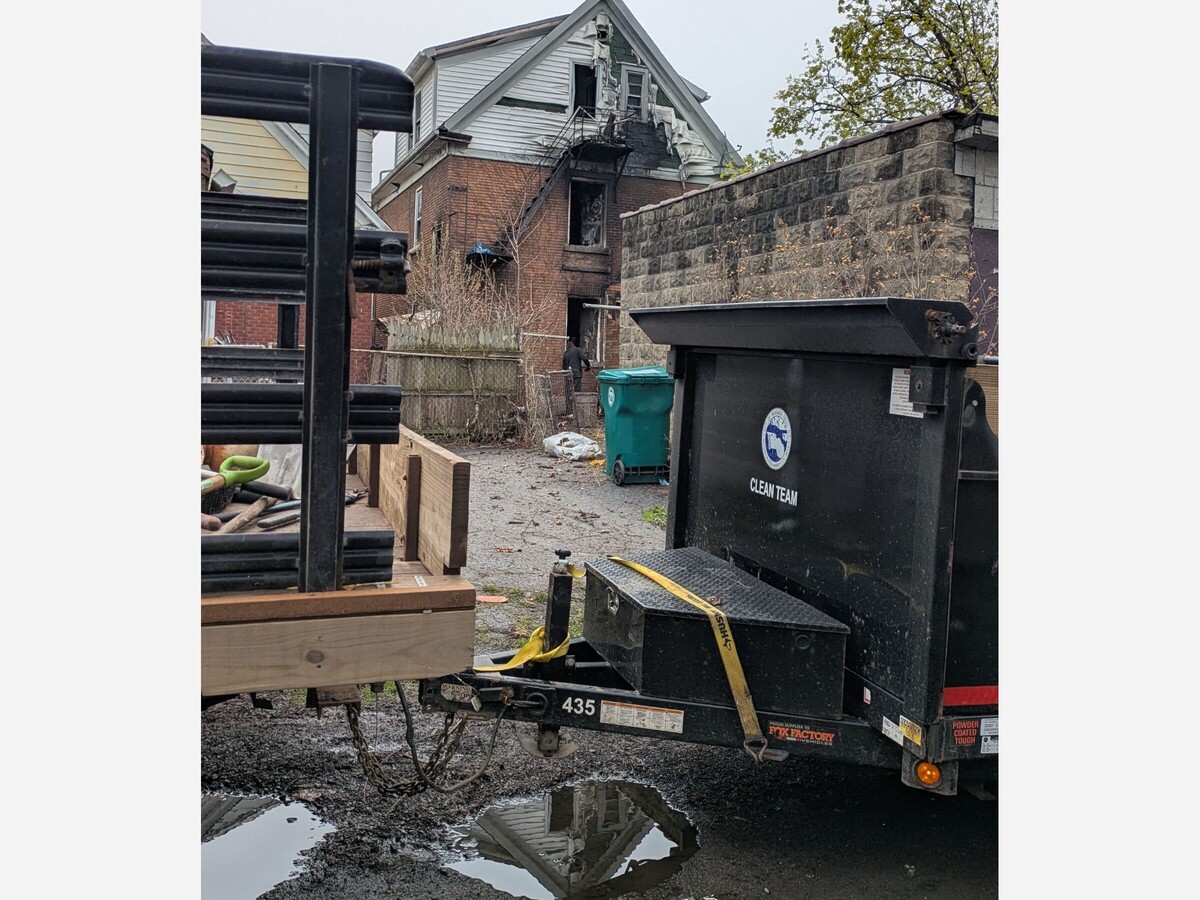
As we drove on, Murphy explained that this seems like anywhere we go in the city. We crawled through the deteriorated alley between 18th and 19th just north of Niagara when we came upon the Clean Team truck and trailer. No one was nearby. Aha! They must be goofing off.
Alas, we saw movement nearby. The Clean Team has 3 employees. One called in on Friday. The two guys we found were cleaning out a backyard behind a vacant home that was one of multiple recent 19th Street arsons.
Murphy said the spate of recent fires on 19th Street is the topic of debate. Some blame vagrants. Another theory is a serial arsonist. The truth is we don’t know.
The workers were carrying pails of trash, one at a time, from the yard behind a burned out city-owned house. There is no glory in that work, only grit, like Sam Carrick, playing in a Stanley Cup Final 14 years after being drafted by the Leafs and showing up for the Sabres at 34 to do what it takes.
I asked Murphy what he does when he goes past a property like one that looked disgraceful. He said he would report it to the clean neighborhoods inspector, who is in public works, not the building department.
“The Clean Team is 3 people taking care of the whole city,” Murphy said. “We have 12 spots.”
Clean Team is a way for a person looking to get ahead to do so. DPW likes to bring in people who have put in some time grinding, doing what it takes to get ahead.
As hard as they work, it's hard to see progress. It certainly doesn’t feel like progress. And that insurmountable trash ignores another harsh reality. These are the same guys who will be cutting lawns on vacant lots in a few more weeks. Which job is more important and how do you prioritize?
About finding employees
The DPW has 110 people with 25 to 30 jobs open on any day. Personnel shortages are everywhere. It’s not just 2 people trying to do the work of 12 like the Clean Team or 3 trying to do the work of 7 like Forestry. Shortages are everywhere.
The city advertises, hosts job fairs and still struggles. Decent wages, benefits and the promise of a pension are not enough for some folks looking at the prospect of dragging soggy rubbish from the rear of a burned out house in a war zone alley on 19th Street even if it comes with a chance to see a stray black cat bounding past hoping to catch a rat for dinner.
Murphy sees the problem as societal and worse post-pandemic.
“For whatever reason, people don’t want to work,” he says. “We don’t get the applications we used to. The residency requirement makes it that much harder to get people too.”
Many of those who do apply aren’t good candidates because they don’t have a valid drivers license, can’t clear a background check or haven’t worked in a few years because of injuries that leads to concern they might be a comp case waiting to happen.
“We try people temporarily on the Clean Team,” Murphy said, “working seasonal. That’s really where we pick our workers from. The only time we don’t is if we need a plumber or trades.”
Murphy looks back on his time as a union mechanic in the auto industry and wonders why the union doesn’t take care of its workers that way.
“I don’t feel like they work in the interest of the employee, as far as training, licensing and developing people” he said. “This union doesn’t do anything but collect money and make excuses.”
And then the hot patch crew
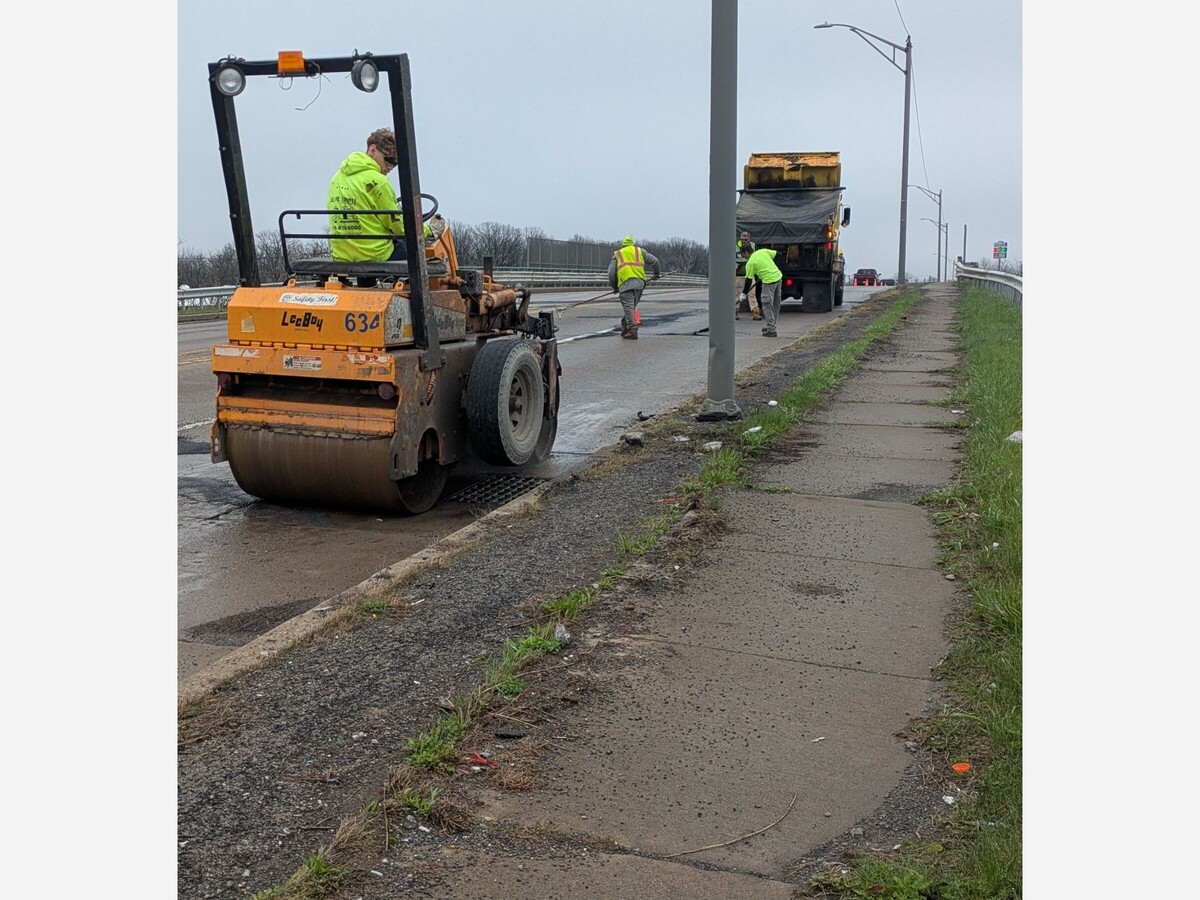
They hadn’t made it to Highland yet because they were still hustling on the Porter Road Bridge overlooking the Public Works yard. They were working on the west side of the bridge in the southbound lanes. Four people, a dump truck, a roller.
Murphy parked and put the flashers on to mark the work zone. Two workers shoveled asphalt in place. Another raked it out, carefully. The roller waited nearby with a driver seated. That section of road almost looked like more patch than pavement.
This is the third time the Express has seen the guy with the rake working carefully, smoothing things for the roller, never touching a shovel.
“Some guys just like certain jobs,” Murphy explained, standing by the guardrail overlooking a yard filled with old equipment including a fleet of trashed police cars.
“I wish we got as much equipment as they do” Murphy said about the junkyard below.
As we looked at the crew working I floated an idea at Murphy.
“The council delayed a decision on air cleaning equipment for the senior center. I bet they wouldn’t mind purchasing that machine Tonawanda got that uses millings to hot patch year round,” I said.
“I hope the mayor gives it to us,” Murphy said with the resignation that it's as much out of his control as it is mine.
With that, we hopped back in the truck and drove back to the yard. Public works is not in a bad place, they just have a tough task without enough skaters on the ice and a long playoff drought that makes it hard to keep faith things will get better. Maybe there are Better Days ahead.

Sunny, with a high of 84 and low of 57 degrees. Sunny during the morning, clear overnight.



I cringe when I see that standard chaotic AI garbage flyer.