79° and Partly Cloudy



Image
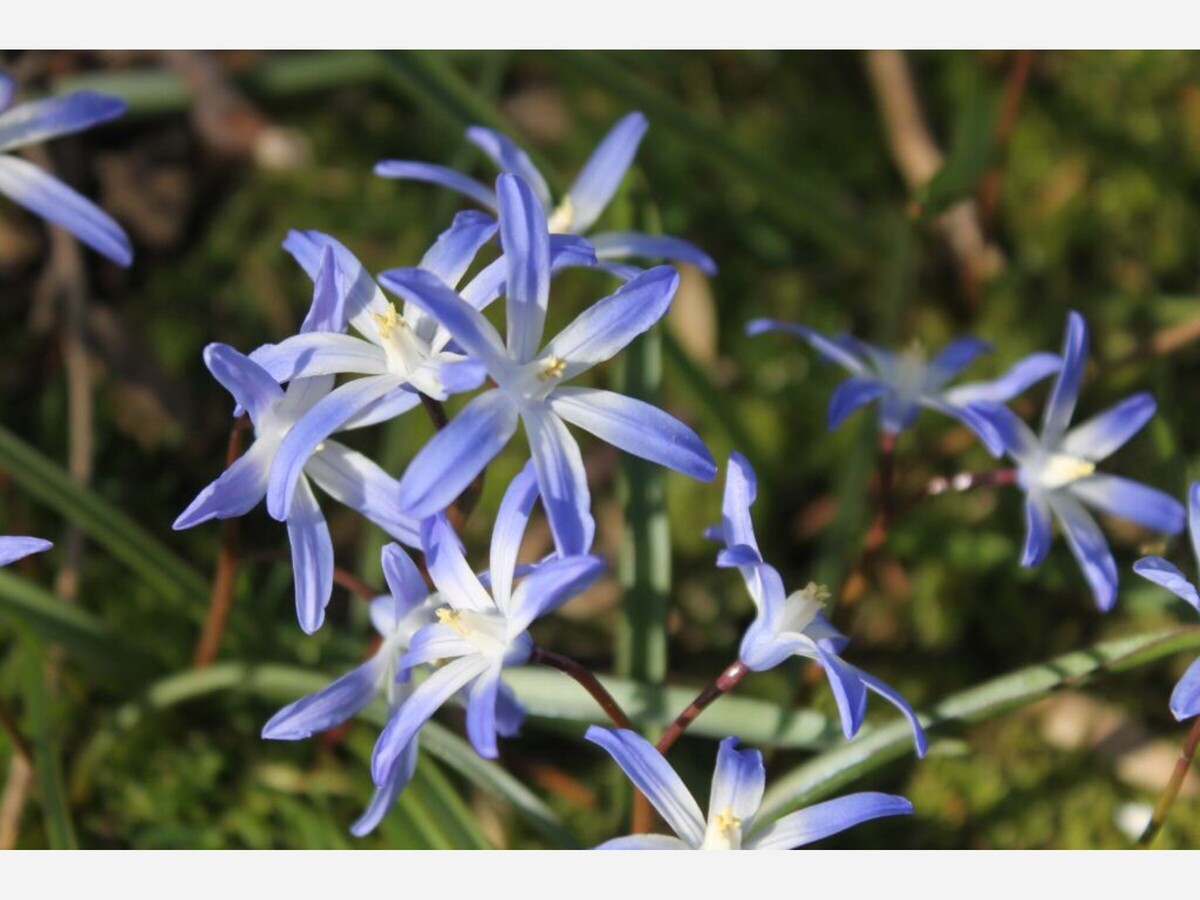
(Editor’s note: In the before times, (before Covid and before we abandoned Clarence for Niagara Falls,) I still read Bob Confer’s writing because his voice, about nature, and politics was authentic and informative. It was from Confer I learned about Glory of the Snow. I was meeting about car insurance and referrals with Scott Medole one day when I saw the lot next door staked out of the new headquarters of Cortese Construction and, looking across the grassy area and saw blue flowers that would soon be decimated. I came back with a shovel and transplanted some to our home. I need to do the same thing this spring only from a grassy area near the carcass or Robert Moses.)
By Bob Confer
Wellsville Sun
Our springs are too fleeting. They pass quickly, and amidst the hustle and bustle of our day-to-day lives it is often difficult to stop and enjoy the beauty before it’s gone. Sometimes you just have to stop, relax, and take it all in. A flower that deserves this sort of vernal admiration will bloom soon and adorn many lawns in the region with bright color.
Glory of the snow is one of my favorite flowers. For a brief period of time they pop out of the muddy landscape to create a carpet of blue while the rest of the plant kingdom has yet to green.
These wonderful flowers are not native to Western New York; they came from Turkey. They aren’t what you would consider an invasive species, either. But, they have made a home for themselves throughout the oldest communities in the region.
European immigrants planted the delightful flowers around their homes, so you will see vast colonies of them around many houses that were built in the 1800s. I am confident that those in my yard in Niagara County date back to an initial planting around 1860 when the old farmhouse was expanded.
These members of the asparagaceae family (which also includes the asparagus that you feast upon) are long-lived and colonizing thanks to healthy bulbs that allow the colorful sprites to come back year after year. With no pests other than nematodes, they are allowed to flourish.
If you have them in your lawn, be careful with them as you could end up being their biggest pest. Do not rake or aerate where these plants grow, because the bulbs aren’t that deep. Also, don’t mow their leaves, which can hang around for a month or two after the flowers wilt. Give those leaves as much time as possible to get nourishment from the sun, ensuring a long future for, and expansion of, the colony.
Variations of glory of the snow (which also go by the name of chionodoxa) have been appearing at nurseries and department stores in recent years. But, those are nothing like the heirloom varieties which have become a long-lived part of the local landscape. The big box plants are a little taller, less dainty, and much heartier.
The older glories of the snow are spectacular despite their size. Most will reach a height of only 3” to 4”. The ¾”-wide flowers sport four to six skinny petals that are baby blue in color (some variants are light violet) with a white eye in the middle. They will bloom for 1.5 to 2.5 weeks.
After witnessing their birthing and withering every spring of my life, I’ve grown to believe that excessive heat will shorten their flowering season – it’s almost as if warming spells have an adverse effect on them. They relish the cold, hence their name, and surprise snows have no negative impact on them; they’re just as beautiful as ever.
If you have an old homestead that has glory of the snow, savor them. Spring is short. Life is short. To me, these flowers are, in a way, Nature’s timepiece. It’s as if I can measure the passing of the years by the recurrence of this annual, glorious spectacle. I’m happy to see them come, sad to see them go.

Sunny, with a high of 83 and low of 68 degrees. Don't forget your umbrella! Patchy rain nearby for the morning, sunny in the afternoon, clear overnight.