

Image
By Jeffery Flach
Gorgeview Hostel
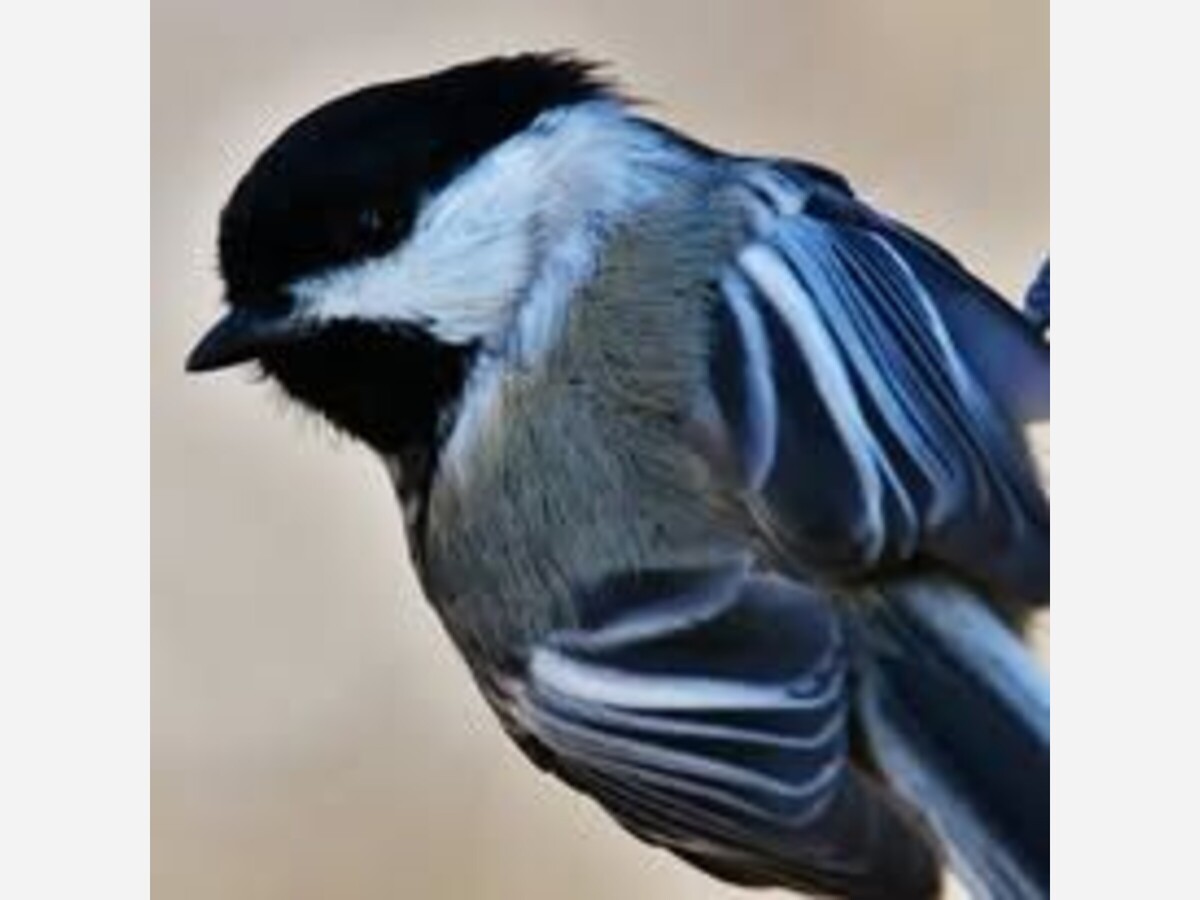
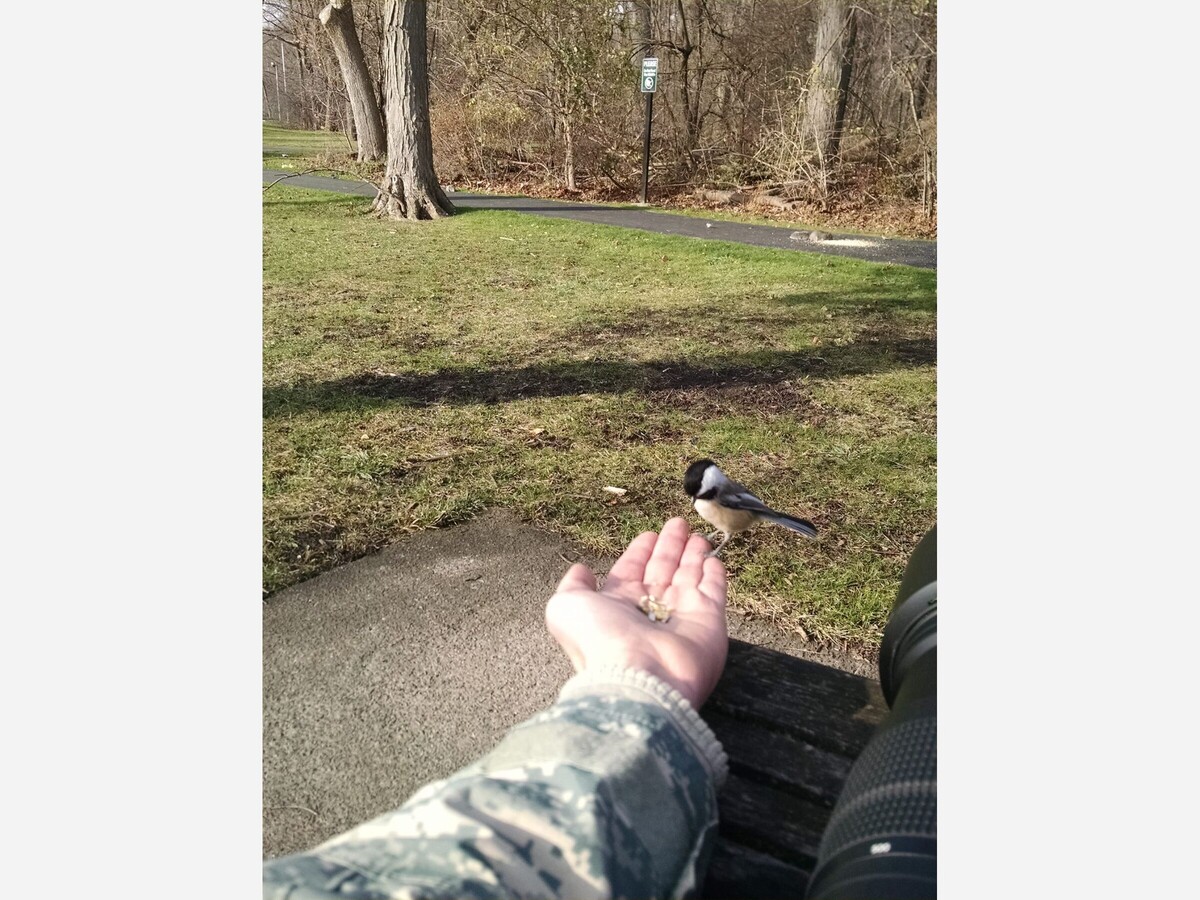
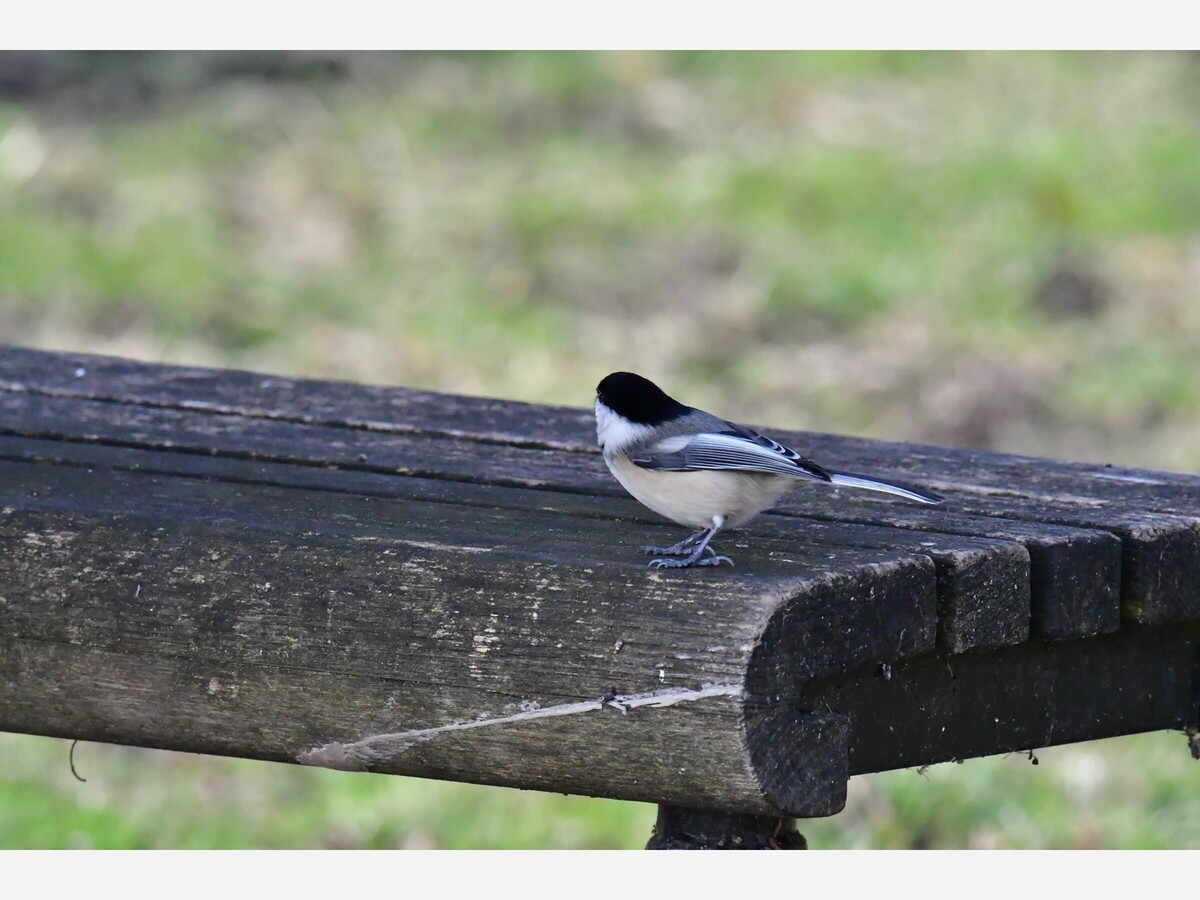
The Black-capped Chickadee belongs to the forests and neighborhoods of the northern United States and Canada. It is built for winter. It does not leave when the leaves drop and the snows fall. It makes the cold months warmer for anyone willing to visit them. This matters to us because Niagara Falls often forgets how to capitalize on its northernness.
If you walk the gorge rim in the off-season, you will meet chickadees. During the winter you’ll never miss them in the old growth forest of Goat Island. They move through the branches in short, decisive hops pulling edible things from crevices other species would never notice. Then they flit a few feet away, continuing the same pattern. This is why humans enjoy watching chickadees. In my experience, they enjoy watching us as well. They are a demonstration of efficiency in our landscape especially in the winter when nature demands it.
In Niagara Falls, a city still working through the consequences of legacy industry, the chickadee can be a metaphor for what a smarter, regenerative, and ecologically sound economy looks like. The chickadee is, in its own way, a circular economist.
In winter, chickadees survive by turning the overlooked into the useful. They extract value from residue: dormant insects tucked into bark seams, eggs hidden in bud scales, seeds scattered and half-buried. They also cache. They store food in many locations and return to it later, not as hoarding, but as distributed resilience.
Niagara Falls spent decades living with the opposite model: a linear economy that treated land as disposable until it manifested in civic damage. If we want to evolve, we need an economy designed more like a chickadee’s life. We must build local loops, practical recovery, and systems that turn “waste” into inputs. We must also be looking for value in our land 12 months out of the year.
An important place to start is with updating the city’s comprehensive plan. A modern plan should not only talk about housing, streets, and land use in separate chapters. It should plan integrated systems that see local ecology as an essential civic system. It should plan a future industrial base that is more circular and provides 12 months of opportunity in synergy with tourism not in competition or conflict with natural resources. The next COMPLAN must describe methods and set conditions for turning what is now wasted into inputs for other newer, more innovative industries. Circular industries and economies are not slogans. They are sets of principles, practical industries and policies that keep value circulating locally while reducing pollution and cost. They capture and hold value versus extracting and exporting it. The results are jobs, resilience, and a higher quality of life via an improving environment. They both reverse and prevent decay and decline.
There are many loops or systems that once established will aid us in achieving this. For example, food waste and yard waste can be used as inputs for production instead of decaying in landfills. In a city that hosts millions annually, our food waste production is nearly as large as residential consumption. These waste sources can be turned into nutrient rich worm castings in a vermiculture facility. Worm castings are valuable, nutrient rich, natural fertilizers that support parks, gardens, and urban agriculture as well sold to farms and landscapers across the county. They are far superior in quality to synthetic fertilizers, take far less energy to produce and distribute. More importantly their use comes without the hazards that synthetic fertilizers create through runoff into our creeks and streams. You can increase crop yields and quality at lower costs and far less unintended environmental harm. This is not theoretical. It is a proven tool for cutting disposal costs and agriculture production costs.
Another example involves energy loops. Waste heat from data centers and other modern industries can be a resource rather than a problem by supporting controlled-environment agriculture like mushroom cultivation, or indoor cultivation of micro-greens providing local fresh greens year-round. They could also provide district heating for adjacent commercial plazas or warehousing facilities.
Ecological tourism is not only about rare birds or pristine wilderness. It is about places that demonstrate ecological intelligence. These newer, cleaner, innovative industries can be year-round attractions in themselves. Micro-museums like the Power Vista within such facilities can welcome visitors in all seasons to see and learn how these industries operate in more efficient and ecologically sound ways. Thus, making the industrial base a tourism multiplier. When Niagara Falls updates its comprehensive plan, it must embrace this logic of turning waste into inputs, and making these systems visible through tours, learning nodes, and interpretive storytelling
If we do, we will regain our reputation as a global leader and one of the greatest ecological world wonders. Next time you see a Chickadee, think of a future circular economy.

Overcast, with a high of 65 and low of 51 degrees. Overcast in the morning,