


Image
Albany Times Union
ALBANY — From campgrounds in the North Country to hotel suites near Niagara Falls, businesses along the Canadian border in New York have felt the pinch as a result of strained political and economic relations between the U.S. and Canada.
According to data from the U.S. Department of Transportation, the number of people entering New York from Canada in 2025 decreased by 3.4 million from the previous year, a 21% drop. That number includes visitors entering New York from Canada via personal vehicles, trains and buses.
The normally solid U.S-Canada relations have seen a dramatic shift fraught with tariffs imposed by U.S. President Donald J. Trump, along with statements made by Trump speculating about Canada joining the United States. Public opinion of the U.S. by Canadians has plummeted: A recent poll conducted by The Globe and Mail newspaper in Toronto found that only 9% of Canadians agreed with the idea that the U.S. is a “trustworthy ally” of Canada. A majority of respondents to the poll also said they had cancelled plans to visit the U.S. as a result of comments made by Trump.
That decline in visitors has been felt in the North Country, home to tourist attractions that include, Lake George, Lake Champlain and the Adirondack Park. According to another survey by the North Country Chamber of Commerce, 83% of local businesses reported a decrease in the number of customers from Canada, with 70% attributing the decline to the political climate and tariffs.
“Some of our attractions did see a real loss, and we worked really hard to mitigate that as best we could,” said Kristy Kennedy, vice president of marketing and tourism for the chamber. “A percentage of our visitation is down which didn’t get picked up from a different demographic, so there was spending that was down.”
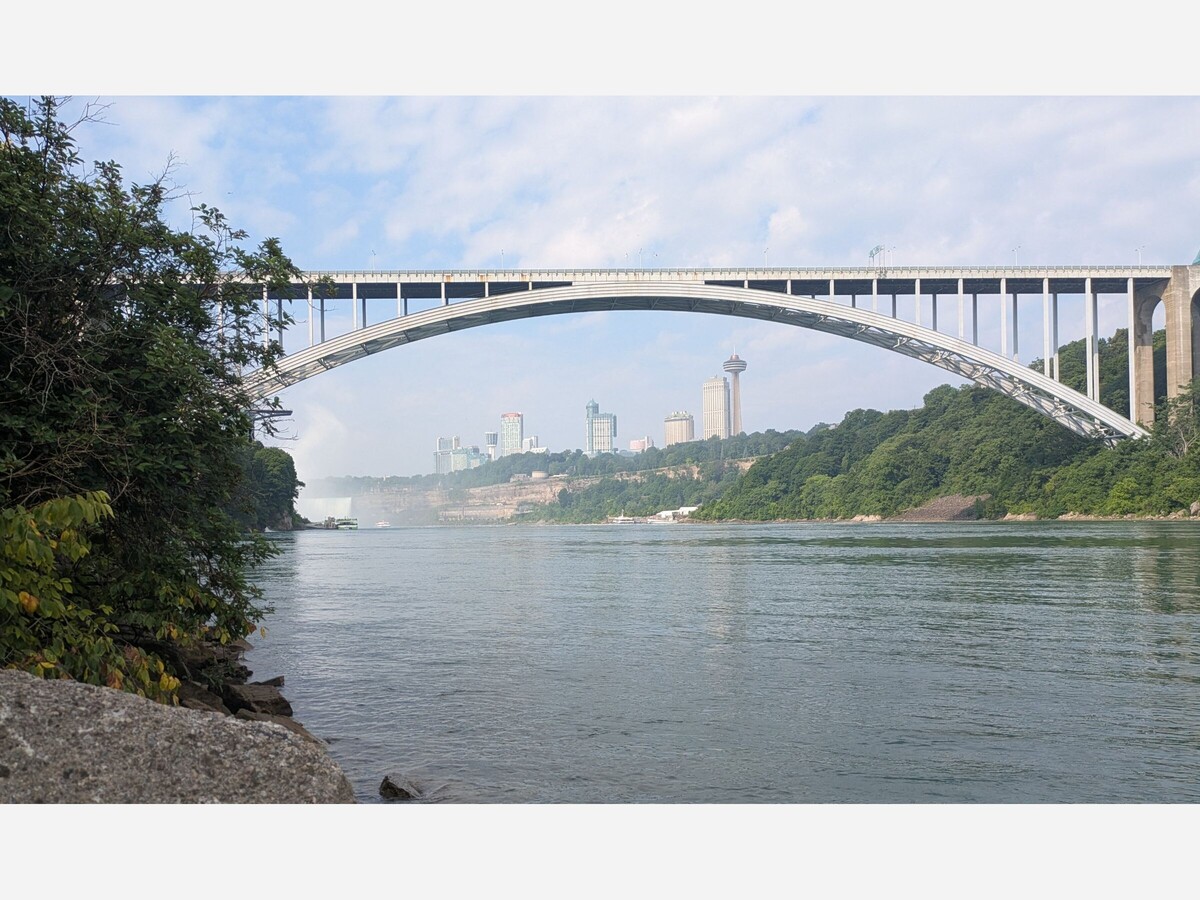
On the American side of Niagara Falls in the western region of the state, there has also been a noticeable drop in visitation. The Niagara Falls USA Visitor Center reported a 27% decrease in visits, and also said it had heard from many of its partner businesses that a lack of Canadian tourists has impacted their bottom line.
“We have received feedback from Canadian clients who canceled bookings for conferences or events in Niagara Falls from 2025, noting tariffs, travel advisories and strained government relations between the U.S. and Canada as reasons,” the organization said in a statement.
Among individual border crossings, personal vehicle passengers entering into the U.S. in the Buffalo-Niagara Falls area declined by 1.9 million last year, a 20% decrease, while entry from Quebec at the Rouses Point crossing near Lake Champlain declined by around 639,000 people, a 27% decrease. The Alexandria Bay and Ogdensburg crossings from Ontario into Jefferson and St. Lawrence counties, respectively, both saw a drop of people entering the U.S. by more than 28%.
The numbers show a reverse in the trend of border crossings that had been creeping back to pre-pandemic levels. Before 2020, the number of people entering New York from Canada had hovered around 17 million annually, before dropping dramatically over the next three years due to the closure of the border due to the pandemic. But by 2024, that number of people entering New York had climbed to more than 16 million before falling dramatically last year.
Though Canadians make up only a small share of visitor spending across New York, their country still contributed $1.7 billion in tourism spending in the state in 2024, according to a report released by Empire State Development. That accounted for about 8.5% of all foreign visitor spending in the state that year. (A 2025 tourism report has yet to be released by Empire State Development.)
But Canadian spending, or a lack thereof, can be felt more strongly in border regions of the state such as the Adirondacks, Lake Champlain and Niagara Falls.
In the North Country, Kennedy said the Chamber of Commerce had launched new marketing campaigns to try and sway Canadians to return. Elements of the campaign include displaying bilingual signs, flying Canadian flags outside storefronts and offering Canadian-specific promotions. But the challenge of luring more visitors from north of the border is also exacerbated by an unbalanced exchange rate attributed in part to a weak Canadian dollar and high U.S. prices that has left Canadian visitors spending more than $1.35 in their currency for a U.S. dollar.
“We need to heal a relationship that has been intertwined for so long. There is mending to be done,” Kennedy said. “It’s more about telling our local residents to remember how much our Canadian neighbors have done for us throughout history, and also geared towards Canadians, saying we understand and appreciate this relationship and we know right now it’s very strained.”
Some of New York’s most prominent political figures, including Gov. Kathy Hochul and Senate Minority Leader Charles E. Schumer, have also lambasted Trump for his approach to U.S.-Canada relations and its effect on the upstate economy. “Trump’s tariffs and insults are driving our closest ally and key trading partner Canada away, hurting upstate New York’s summer tourism industry and leaving emptier main streets and stores paying the price,” Schumer said in a statement last July.
The drop in New York closely mirrors the fall of people entering the U.S. from Canada across the entire northern border, which last year saw a decline of around 10 million people, or 21.3%, compared to the previous year. In Canada, the country’s national statistics agency has reported that the number of Canadians visiting the U.S. for travel dropped by 25%, and the number of Americans arriving in Canada also declined by 2.9%.
Though still early into 2026, the trend looks to continue this year: In January, the number of people crossing from Canada to New York declined by nearly 17% compared to January 2025. But Kennedy remains optimistic, noting that hotel occupancy rates in the North Country ended strongly during the December holiday season.
“It makes us very curious on what’s to come,” Kennedy said. “It’ll be very telling over the next few months how those numbers continue to shake out.”


Sunny, with a high of 62 and low of 44 degrees. Sunny in the morning, clear for the afternoon and evening,