

Image
By Dan Telvock
NIAGARA FALLS, N.Y. (WIVB) — Pressure on state officials to relocate a family on 99th Street in Niagara Falls intensified Friday after the discovery of industrial waste and elevated chemical contamination on their property earlier this summer.
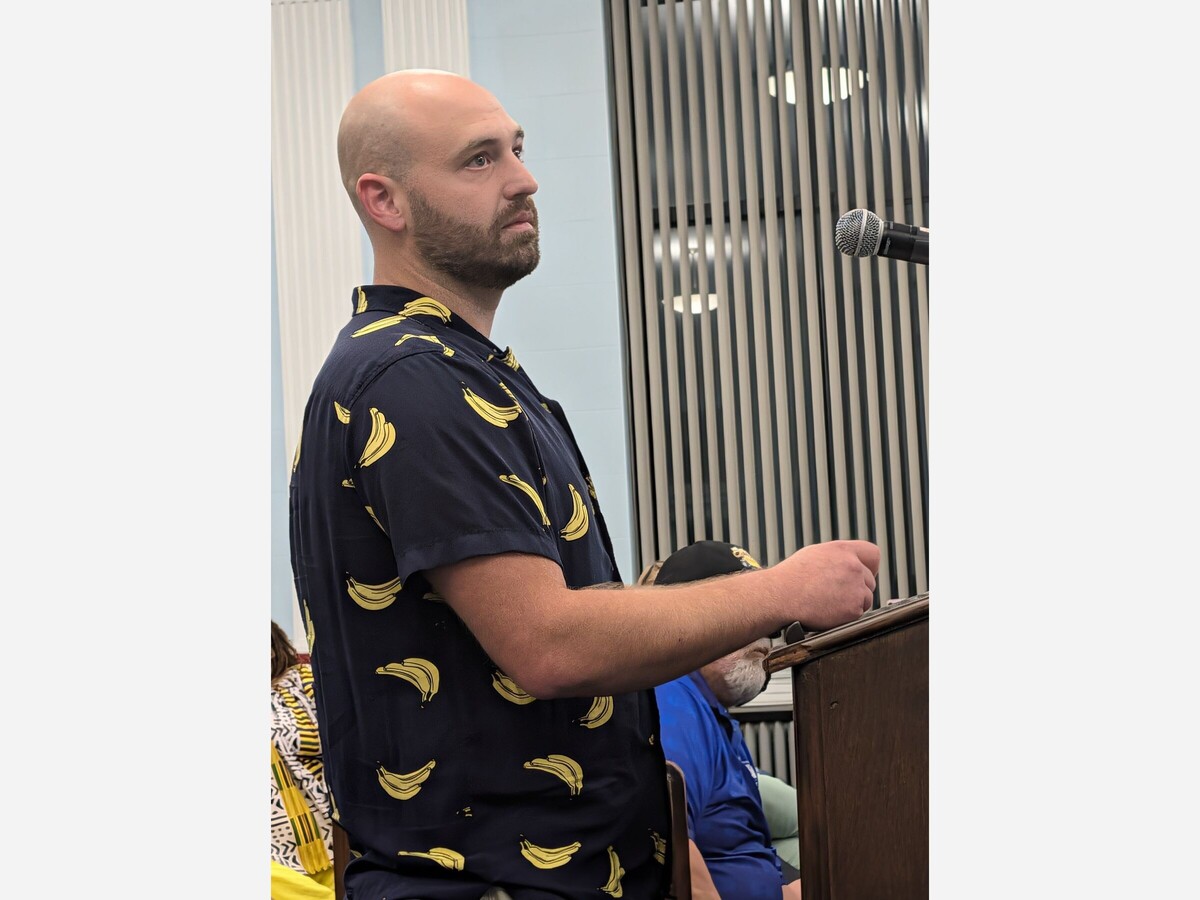
Homeowners Daniel and Jocelyn McKiernan were joined at a news conference by a host of people and organizations, including David Carpenter, a public health physician and professor at University at Albany, and two retired state Department of Environmental Conservation employees, one of whom supervised work at Love Canal.
Together, they joined a growing chorus of people calling on the state to relocate the McKiernans and their three young children. The McKiernans said they’ve been demanding the state relocate them for nearly two months, only to be rebuffed each time.
Earlier this week, they received soil and sump water test results from a contractor they hired. The results showed elevated levels of numerous chemicals and heavy metals. The family has since moved in with a friend in Grand Island.
“This is a life-threatening situation,” said Jocelyn McKiernan.
Their property is about 300 feet from the northern edge of the fenced Love Canal containment area and is within Emergency Declaration Area 4, which was declared habitable in 1988, after the government cleaned contaminated creeks and sewer lines. To date, the DEC has not linked contamination found on the family’s property to Love Canal and has told the family that landfill control measures remain effective.
Any decision to relocate the family would be made by the New York State Department of Health. However, the agency has repeatedly said there is no public health reason to move them.
DEC Assistant Regional Director Chad Staniszewski told the family during a conference call earlier this month that the agency has never relocated a family under similar circumstances and that “there’s people who have higher contamination on their property.” He cited a Superfund site in Corning, where more than 180 residential properties were remediated without relocating residents.
“Governor Hochul has made it clear in words and actions that her first priority is the health and safety of this family,” said Ken Lovett, the governor’s senior communications advisor on emergency and environment.
On July 13, when excavating for a swimming pool, the McKiernans uncovered industrial waste, including black soil, graphite carbon rods and industrially processed rocks with solid, silvery bubbles beneath the topsoil.
The DEC removed a pile of excavated soil, collected soil and sump water samples, installed a plastic liner over portions of the exposed yard and covered the area with clean topsoil. Test results showed elevated levels of several heavy metals, including lead, copper and nickel. Soil and sump water samples also contained traces of pesticides and other man-made chemicals.
The DEC offered to do more comprehensive testing, but the family was dissatisfied with the agency’s proposed work plan. The McKiernans said they and Whitestone returned the work plan with recommendations and comments, and are waiting to hear back.
“It was an inadequate plan, at best,” Jocelyn McKiernan said.
Carpenter, who is also the former director of DOH’s Wadsworth Laboratory, said he has spent years studying the health effects of chemical and heavy metal exposure and is concerned about what has been found on the family’s property.
“There is no question but what the levels monitored by DEC themselves are excessive and pose dangers to human health,” Carpenter said. “And I’m especially concerned about children.”
Retired DEC hazardous waste geologists Ed Miles and Kelly Cloyd also urged state and elected leaders to act.
Miles said the state is “prolonging the family’s agony” by refusing to move them.
“We’ve done this before, so it’s no surprise what we need to do,” said Miles, who supervised work at Love Canal in the late 1970s. “I don’t know why we’re lollygagging around.”
Cloyd said the property contains chemicals associated with Love Canal as well as elevated levels of lead, a neurotoxin that poses serious risks to children.
“This is the broken American dream and it’s a shame that there is more than one generation. Yes, we were naïve in the beginning but we’re not naïve now,” Cloyd said. “We should know better.”
After the discovery and getting back DEC test results, the McKiernans hired Whitestone Associates to conduct independent testing. Earlier this month, while drilling in the backyard, Whitestone workers encountered a thick gray liquid resembling cement slurry that began spurting from the ground. The McKiernans said those test results showed more elevated levels of heavy metals and chemicals in the soil, indoor dust, and the sump pump, which heightened their fear.
Charles Guzzetta, a regional manager with Whitestone Associates, said in a letter to the McKiernans that he identified multiple buried clay layers overlying industrial fill containing ash, slag, sludge and carbon rods.
“The identification of multiple buried clay layers suggests that the materials may have been covered/capped in the past,” Guzzetta said in the letter.
He also raised concerns about several swales that crossed the Love Canal area and appeared in a 1951 aerial photograph. According to Guzzetta, those swales drained into Black Creek, part of which bordered the southern edge of the McKiernans’ property. The creek has since been channelized and filled.
Historical records show the swales, along with Black Creek, Bergholtz Creek and underground sewer infrastructure, served as pathways for contaminants migrating from Love Canal. As a result, the government used high-pressure water to clean storm and sanitary sewers and removed contaminated sediment from sections of both creek beds.
The effectiveness of that work came under scrutiny in 2011, when city crews reparing a damaged sewer line at 96th Street and Colvin Boulevard, found buried chemical waste linked to remnants of Love Canal.
Guzzetta recommended that the family consult a toxicologist or physician to determine whether immediate measures should be taken to protect their health and safety. He also advised them to work with the DEC to “delineate the nature and extent of the fill material and contamination at the property, along with assessing indoor air quality, to assure appropriate remedial measures can be implemented and that the home is safe for occupancy.”
The governor’s office said in a statement that they need access to the McKiernans’ property to complete further testing before they can make any decisions on the next step.
“The family’s own third-party consultant concluded that they should work with DEC to implement a work plan and notably does not specifically recommend relocation,” said Lovett, citing Guzzetta’s letter to the McKiernans. “DEC and DOH need to conduct further testing, but have repeatedly been denied access to the property. Once the access is granted and we have the results of the subsequent testing, we can responsibly determine the next steps, and all options for potential remediation will be considered.”
The McKiernans said Friday night that Whitestone’s report was not intended to provide medical advice on whether they should be relocated. However, they said they submitted letters from two physicians, including Carpenter, who urged the state to temporarily move them.
“The comments noting a lack of urgency for relocation from our environmental engineer, when we’ve supplied numerous medical professionals advocating for that, is laughable,” Daniel McKiernan said.

Sunny, with a high of 63 and low of 49 degrees. Partly Cloudy in the morning, sunny for the afternoon, clear in the evening,