57° and Overcast


Image
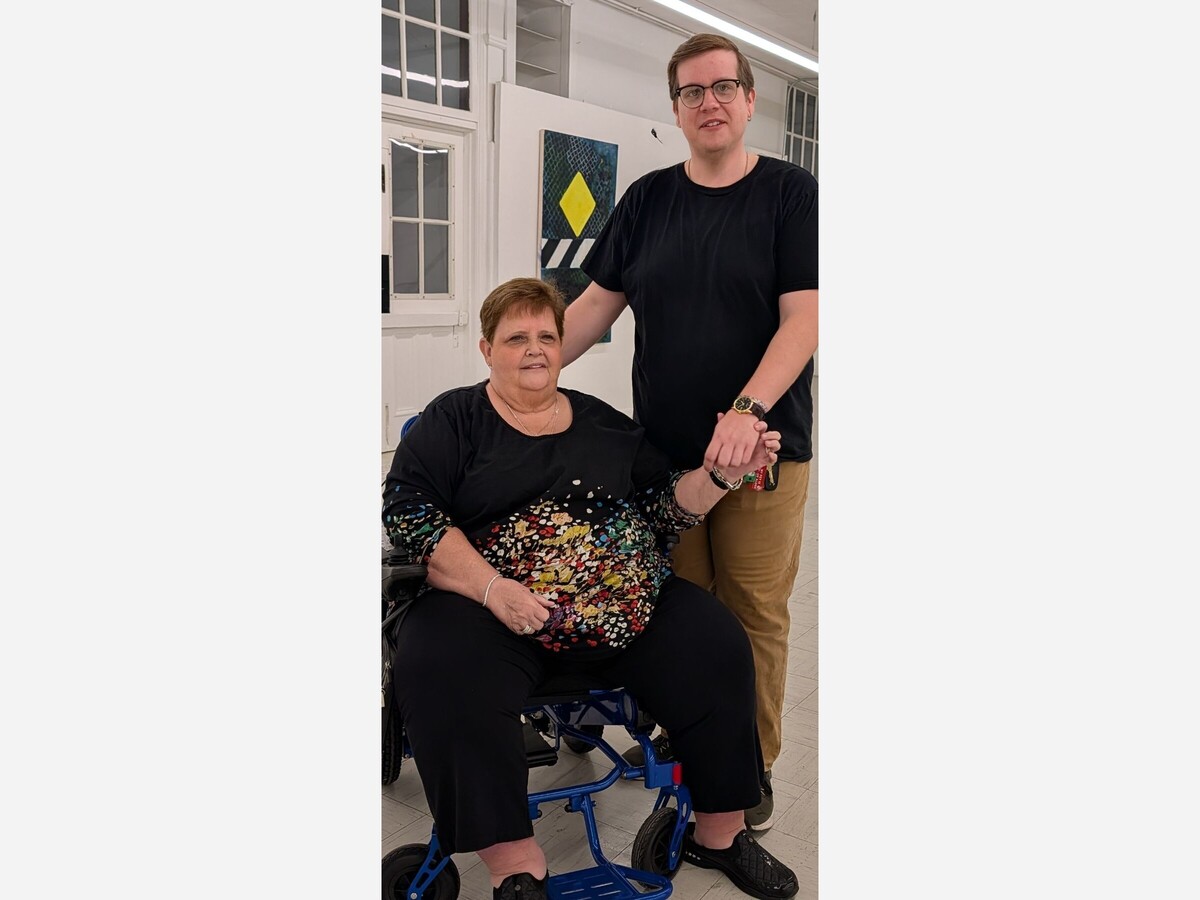
Judi Nasakaitus and her son Dana Tyrell
It’s been a crazy couple days to visit the Niagara Arts and Cultural Center.
First, it was the Love Canal media panel Wednesday night, with Luella Kenny showing us again what the term “indomitable spirit means” just by her presence in our midst.
Author Christen Civiletto moderated the discussion with WIVB’s Dan Telvock, the Niagara Gazette’s Mark Scheer, MacKenzie Shuman of the Buffalo News and retired TV broadcaster Rich Newburg.
The discussion began with rote stuff – the Clean Air Coalition talking about 20,000 tons of buried waste below Love Canal and Jane Fonda visiting in 1979 and a screening of “In our own backyards.”
Newburg’s documentary it was fitting entrypoint to
Telvock summarized it: “History gets documented in real time by us and as time goes on, there are fewer and fewer of us.”
Newburg talked about strange times from the beginning of his career that somehow seem parallel to today. He was a student at Ithaca College when Rod Serling was a guest lecturer. Serling’s Twilight Zone production always had a message that was a way of evading network censors while still making a commentary on the human condition. It was always, to wit, as if we exist to serve man.
Shuman talked about the parallel emotions between the video of Love Canal residents Newburg produced with them speaking 50 years ago and the meeting the State hosted to discuss the revelation of radioactive waste in the Town of Niagara.
Women speaking in loud, passionate voice in both instances failed to get a rise out of the bureaucrats.
“There is a massive distrust in the government to do the right thing,” Schuman said.
As Telvock put it, “it’s hard to fathom what people are going through and yet, here we are again.
In the midst of all that distrust is the decline of journalism. Telvock started in a room of 300 years ago. Scheer had more writers working with him in the newsroom at the Medina Journal-Register where he started than exist today at the Gazette and Lockport Union, Sun & Journal combined. And the US&J is down to three days a week with one reporter in the newsroom.
Journalists today don’t have to look for stories but choose which of the 15 voicemails on their phone is most important to the community, which voice strikes a chord.
As that event ended, I headed downstairs and noticed NACC Executive Director Jennifer Pawley working the front desk. There is something to be said for the highest person on the totem pole doing the lowest job.
I was back at the NACC on Friday night for the opening Dana Tyrell’s measuring shadows. His work is stark, emotional and pensive, from Jane Fonda and Lois Gibbs to deep symbolic works portraying what lies beneath and the Blizzard of ‘77.
The Blizzard holds significance because the weight of the snow compressed the ground and when it melted, barrels popped up.
Tyrell explains he is too young to have personally experienced the trauma but it is part of his heritage, his shared history, like a grandchild whose parents never tossed a paperclip because their parents survived the Great Depression and habits get handed down or a descendant of the Holocaust living fearfully because their family always has even when they are generations remove.
The most somber thing for me as I readied to leave the opening was to chat with Judi Nasakaitis about not only the current crisis but what she calls Love Canal 2.0, which she predicts will be the coming relocation of Black Creek Village, the resettled area. In time it will be revealed that not only has the cap on the landfill failed but underground, there is a swell of toxicity flowing under that whole end of the city.
It’s not just Dan and Jocelyn McKiernan living a nightmare but a whole community reliving one.

Sunny, with a high of 59 and low of 45 degrees. Sunny during the morning, overcast in the afternoon, clear overnight.