Image
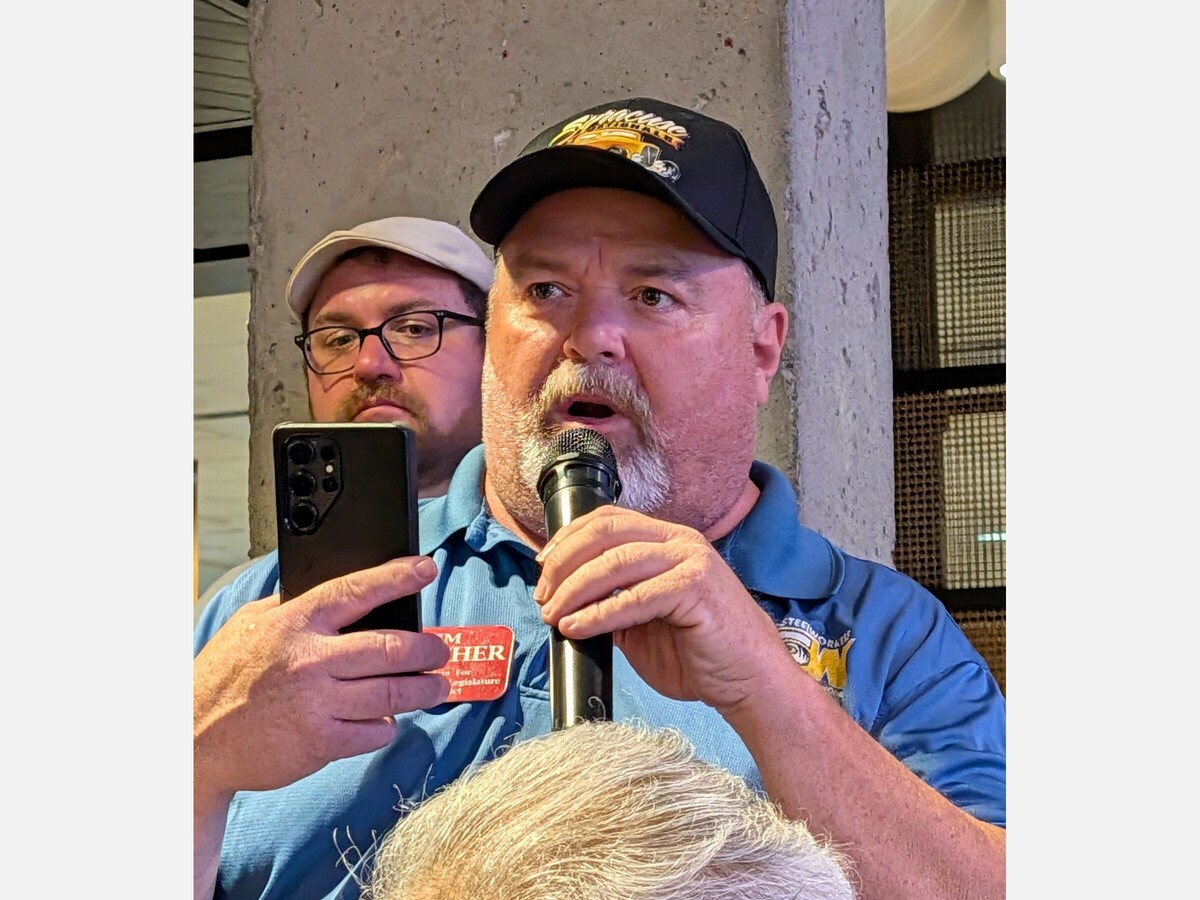
Tim Huether at a community forum on radioactive waste a few weeks ago.



(Editor’s note: The below was submitted by Niagara Falls Steelworkers Union President Tim Huether. It is shared verbatim.)
USW LOCAL 9434: MAYOR CANNOT USE AN “EMERGENCY” TO BYPASS WORKERS, THE CITY COUNCIL, OR NEW YORK LABOR LAW
DPW union says dispute was never about whether Niagara Falls should pave roads or maintain properties — it is about dismantling the public workforce and outsourcing bargaining-unit work
NIAGARA FALLS, N.Y. — United Steelworkers Local 9434, representing employees of the City of Niagara Falls Department of Public Works, today responded to Mayor Robert Restaino’s declaration of a local state of emergency and the administration’s attempt to portray rejected private contracts as the cause of deteriorating road and property conditions.
The Union’s position is simple: Niagara Falls needs its roads paved. It needs vacant properties maintained. It needs a properly staffed Department of Public Works capable of doing those jobs.
What the City does not need is an administration using conditions that developed over years as justification for declaring an “emergency” after elected members of the City Council refused to approve particular private contracts.
Mayor Restaino declared the emergency on July 20 and has publicly blamed the Council’s failure to approve contracts for road paving and property maintenance, describing that failure as a “dereliction of duty.”
The Union fundamentally disagrees.
“Our members did not oppose paving streets. We did not oppose cutting grass. We opposed taking work that Niagara Falls taxpayers employ Niagara Falls residents to perform and handing that work to private contractors without first addressing why the City has allowed its own Public Works workforce to become understaffed and underutilized,” said USW Local 9434 President Tim Huether.
THE ORIGINAL DISPUTE: WHO SHOULD DO THE WORK?
The dispute over the approximately $3.9 million Occhino Corp. paving contract was not a dispute over whether Niagara Falls streets should be paved.
It was a dispute over who should perform the work.
The City of Niagara Falls itself describes its normal paving operation this way: contractors mill the existing pavement, while City DPW employees perform the binder and top pavement layers.
Yet the administration sought approval of a roughly $3.9 million outside paving contract after the Union objected to the transfer of work traditionally performed by DPW employees. The Council postponed and ultimately declined to advance that contract during its July 17 special meeting.
The same basic question arose with the administration’s proposed K.J. Smith Enterprises grass-cutting contract.
That proposal authorized payments of $150 to $175 per standard parcel and $200 per acre, contained no stated maximum contract amount or maximum number of parcels, and was to draw from an account then containing approximately $190,000 to $195,000. Questions were also raised publicly during the controversy concerning the contractor’s corporate status.
Before spending hundreds of thousands — or millions — of taxpayer dollars outsourcing public work, the administration should be able to answer some basic questions:
How many DPW positions have gone unfilled? Why have seasonal and permanent staffing levels been allowed to decline? What would it cost to properly staff the Department? And where is the apples-to-apples analysis demonstrating that paying private contractors is actually cheaper than employing Niagara Falls residents to perform Niagara Falls public work?
The Union has yet to see a convincing answer.
THE TAYLOR LAW APPLIES TO CITY HALL TOO
The Taylor Law imposes significant obligations on public employees and their unions. Public employees cannot simply strike when they disagree with their employer.
But the Taylor Law imposes obligations on the public employer as well.
Civil Service Law § 209-a(1)(d) expressly makes it an improper employer practice to refuse to negotiate in good faith with the duly recognized representative of public employees.
New York courts have repeatedly recognized that transferring bargaining-unit work can trigger that obligation.
Of particular relevance to Niagara Falls, the Appellate Division, Fourth Department, which governs Western New York, upheld a PERB finding in Matter of County of Erie v. State of New York Public Employment Relations Board, 43 A.D.3d 1311 (4th Dept. 2007), involving the transfer of exclusive bargaining-unit work to employees outside the unit without prior negotiation.
Other New York appellate authority states the rule even more directly: outsourcing work performed exclusively by represented employees is a mandatory subject of bargaining under the Taylor Law, and failure to bargain can constitute an improper employer practice. Matter of Lawrence Teachers’ Assn. v. New York State Public Employment Relations Board, 152 A.D.3d 171 (3d Dept. 2017).
That is why the Union is deeply concerned about the administration’s invocation of emergency authority.
“The Taylor Law cannot be a one-way street,” Huether said. “The City cannot tell public employees that state law prohibits them from withholding their labor and then turn around and claim that an executive declaration allows the City to avoid its own obligations under that same system of collective bargaining.”
AN EMERGENCY DECLARATION IS NOT A LABOR-LAW ERASER
New York Executive Law § 24 gives local executives significant authority during a genuine local emergency.
But the statute does not give a mayor unrestricted power to suspend state law.
Indeed, § 24 expressly provides that a local executive’s emergency authority remains subject to federal and state constitutional, statutory and regulatory limitations. Even where local laws may properly be suspended, the statute requires that the action be reasonably necessary to the disaster response and represent the minimum necessary deviation.
That distinction matters.
The Taylor Law is a state statute. It is not a Niagara Falls ordinance that the Mayor can simply set aside.
The recent case of Council of the City of New York v. Adams, 2025 NY Slip Op 32309(U), is also instructive.
There, a New York Supreme Court vacated Mayor Eric Adams’ emergency orders after he used emergency powers to prevent implementation of legislation that had survived his veto. The court emphasized that disagreement with the result of the ordinary democratic process does not itself create an emergency and held that, under those circumstances, the mayor had acted beyond the scope of his emergency authority.
That decision is a trial-court decision and involved different facts, but its warning is directly relevant:
Emergency powers exist to confront emergencies — not to give an executive a second route to accomplish something after the normal legislative process produces a result the executive dislikes.
The Mayor has publicly identified the Council’s refusal to approve these contracts as the reason he was left with “no other option” than declaring an emergency.
That statement raises an obvious legal and public-policy question:
Is the emergency being used to respond to a suddenly occurring disaster, or is it being used to reverse the outcome of a contracting dispute and circumvent the Council and collective-bargaining process?
USW Local 9434 believes that question deserves an answer.
TWO STANDARDS FOR CITY WORKERS
There is another issue that DPW employees can no longer ignore.
When the City believes the Police Department needs staffing, City Hall discusses staffing.
When the City believes the Fire Department needs additional personnel on duty, City Hall discusses overtime, minimum staffing and the resources necessary to protect public safety.
And the Union does not begrudge Police or Fire employees a single dollar they earn. Those employees perform difficult and essential work and should be properly staffed.
But DPW workers perform essential work too.
They plow the streets.
They pave the streets.
They repair infrastructure.
They maintain parks and public property.
They clear debris.
They respond to storms.
They maintain the physical city that police officers, firefighters, residents and visitors depend upon every day.
Yet when DPW lacks sufficient manpower, the administration's answer increasingly appears to be:
Outsource the work.
The City has demonstrated that it knows how to authorize additional compensation when it considers work important enough. In 2025, for example, the administration proposed spending $99,600 for a private Patch Management pothole truck and operator while simultaneously budgeting $100,870 in overtime for City DPW crews performing hot-asphalt repairs.
The question therefore is not whether overtime or additional staffing is possible.
The question is which workforce City Hall chooses to invest in.
“We support our brothers and sisters in Police and Fire,” Huether said. “What we reject is the idea that their staffing shortages justify overtime while our staffing shortages justify eliminating our work. If Niagara Falls needs more DPW capacity, then hire DPW workers, bring back seasonal workers, authorize reasonable overtime where necessary, invest in equipment and rebuild the department.”
PUBLIC SERVICES SHOULD NOT BE PRIVATIZED BY ATTRITION
Local 9434 believes the City has followed a dangerous cycle:
Reduce or fail to replace DPW staffing.
Then point to the reduced workforce and claim DPW cannot complete the work.
Then hire a private contractor because DPW supposedly lacks capacity.
Then use the outsourced work as further justification for not restoring DPW staffing.
That is not efficiency.
That is privatization by attrition.
And taxpayers deserve to know whether the outside contracts actually cost less once contractor profit, administrative costs and the loss of permanent municipal capacity are included.
They also deserve confidence that every contractor receiving substantial public money has undergone appropriate review of corporate standing, responsibility, regulatory compliance, insurance, safety record and past performance.
THE UNION IS READY TO SOLVE THE PROBLEM
USW Local 9434 is not asking City Hall to leave roads unpaved or properties unmaintained.
Quite the opposite.
The Union is calling on the administration to immediately sit down with its representatives and develop a lawful plan that:
“There does not have to be a fight over whether Niagara Falls gets its streets paved,” Huether said. “Put Niagara Falls residents to work paving Niagara Falls streets. Give them the staffing, equipment and resources to do the jobs taxpayers already employ them to do.”
The Union also rejects any suggestion that DPW employees or the City Council members who questioned these contracts created the conditions now being labeled an emergency.
A road that deteriorated over years did not become an emergency because a contract failed to receive three votes.
An abandoned property that has been neglected for months or years did not become an emergency because the Council asked questions about a mowing contract.
And a staffing shortage created over time does not become justification for permanently transferring public work to private companies simply because the administration now chooses to call the consequences an emergency.
“Emergency powers are supposed to protect the public when normal government cannot respond quickly enough,” Huether said. “They are not supposed to become a substitute for collective bargaining, a substitute for City Council approval, or a substitute for properly managing and staffing the Department of Public Works.”
USW Local 9434 stands ready to work.
The Union asks the administration to do the same — at the bargaining table, within the law, and in full view of the taxpayers whose money and public services are at stake.

ABSOLUTELY FANTASTIC! kudos to john cooper, mayor restaino & all who have contributed to this much needed housing for women.

Sunny, with a high of 58 and low of 43 degrees. Sunny during the morning, clear during the afternoon and evening,